

A friendship can feel close, playful and important without becoming romantic. If your own feelings have changed, you might start reading ordinary conversations differently. Give yourself time to notice what you want before asking your friend to interpret the change for you.
You can choose whether to bring it up. If you do, make room for a yes, a no or uncertainty. Both of you get to decide what happens to the friendship afterward.
1. Separate closeness from a wish to date
Ask yourself what you’d like to be different. Are you imagining a date, a sexual relationship, or more regular time together as friends? A clear answer for yourself helps you ask for what you mean.
2. Look at what your friend has actually said
Inside jokes, long conversations and affectionate gestures can all belong to friendship. If your friend has said they want to stay friends or has a commitment that rules out dating, take that seriously. You don’t need to test them to see if they meant it.
3. Pick a moment with room for an honest answer
Choose an ordinary time when neither of you is relying on the other for a ride or stuck at a social event. Try, “I’ve started to feel interested in going on a date. Would that be something you’d want? It’s okay if you don’t.”
4. If the interest is mutual, take one small step
Agree on one date or conversation. You might want to talk about whether to tell friends, how much to share, or how to handle it if one of you changes your mind. A close friendship doesn’t give either person automatic consent to touch or intimacy.
5. If it isn’t mutual, decide what friendship looks like now
Acknowledge the answer without asking them to defend it. It’s okay to need fewer calls or one-to-one plans for a while. You can say, “I value our friendship and I need a bit of space. I’ll reach out when I’m ready.” You can also stay friends if that feels comfortable for both of you.
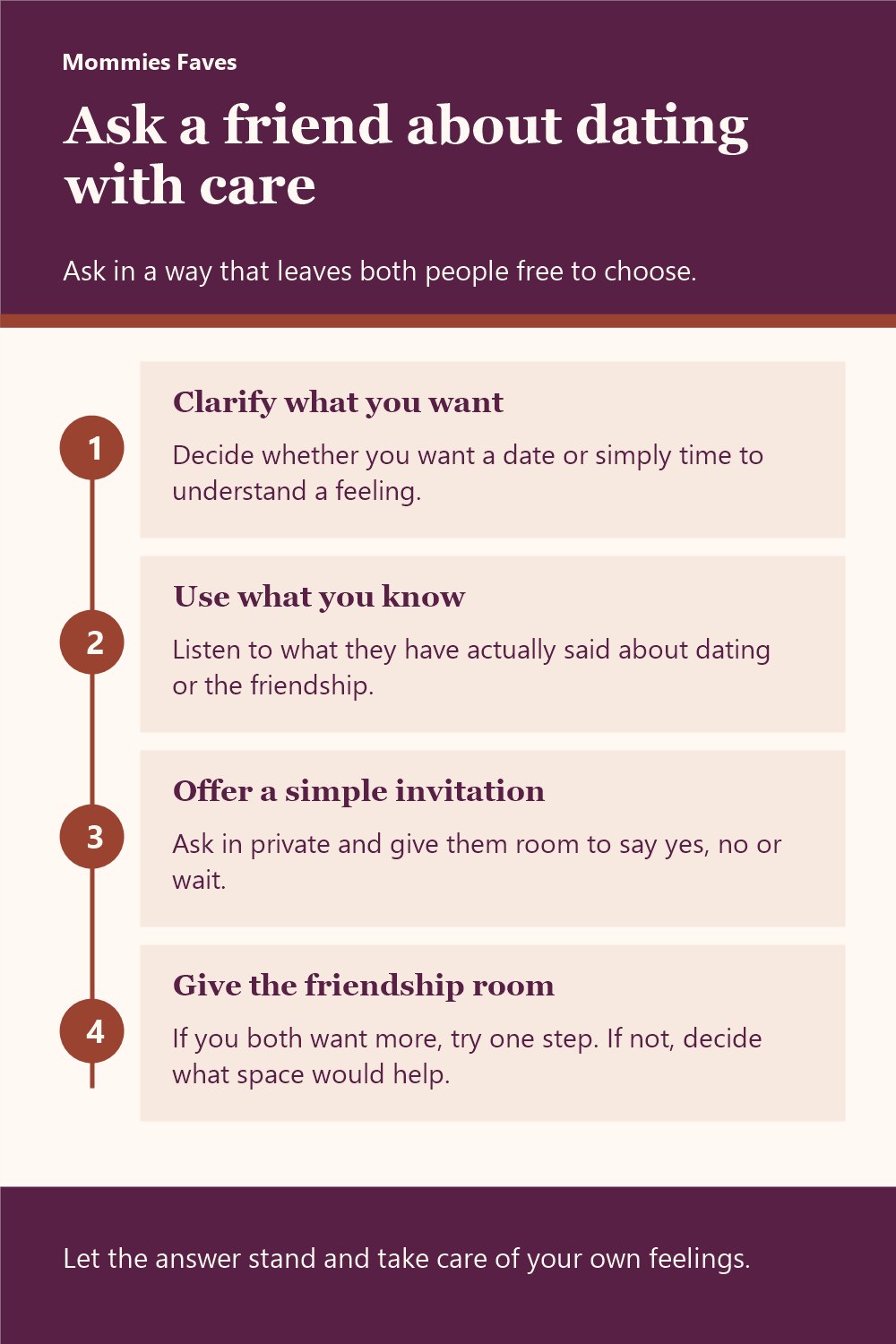
Read the infographic in text
Ask a friend about dating with care Ask in a way that leaves both people free to choose.
- Clarify what you want Decide whether you want a date or simply time to understand a feeling.
- Use what you know Listen to what they have actually said about dating or the friendship.
- Offer a simple invitation Ask in private and give them room to say yes, no or wait.
- Give the friendship room If you both want more, try one step. If not, decide what space would help.
Let the answer stand and take care of your own feelings.