

You can spend a great deal of time with a partner and still feel lonely. You might miss conversation, affection, shared responsibility or the feeling that someone understands what life is like for you.
Loneliness deserves attention without becoming a verdict that you chose the wrong person or failed to be open enough. Look at what you are missing, what has changed and what support is available.
In this article
1. Notice when you feel alone
Think about a recent moment. Were you trying to talk while your partner was distracted? Did you spend a difficult day caring for someone without another adult to speak to? Did an important concern go unheard?
Specific examples can make the need clearer. Feeling alone during an exhausting week may need a different response from feeling repeatedly dismissed whenever you ask for help.
Consider what has changed
Work schedules, a move, illness, bereavement or caring responsibilities can change your access to company and support. The NHS guidance on loneliness describes varied experiences and circumstances; being around other people does not always prevent the feeling.
2. Name the connection you miss
Try finishing one sentence: “I would feel more connected if we…” You might want an uninterrupted conversation, a shared meal, practical help or more time with friends. You may have several needs.
Keep room for your own preferences. You can like different activities, need time alone or be unsure how much to share. Closeness does not require disclosing every private thought or becoming more vulnerable than feels comfortable.
If you feel unable to speak because you expect ridicule, threats or punishment, take that concern seriously. Confidential individual support may be a safer starting point than a relationship exercise.
3. Make a clear request
If it feels safe, choose a time when you can both listen. Describe the experience and a possible change: “I’ve felt alone in the evenings lately. Could we put our phones aside and talk after dinner tomorrow?”
A concrete request gives the other person something to respond to. They may agree, suggest another time or explain a difficulty. Try to find out what is realistic rather than assuming either person already knows what the other needs.
For a practical concern, make the task clear: “Could you handle bedtime on Tuesday so I can meet a friend?” Include the responsibilities involved instead of leaving one person to organise all the help.
4. Listen and review what happens
Ask how your partner has been experiencing the relationship too. Listen without turning the conversation into a competition over who has it harder. Both people can have unmet needs.
Choose one change together and return to it. Did the conversation happen? Was the task actually shared? Did either person need something different? An agreement is more useful when it is followed by action.
If requests are repeatedly dismissed, consider what that means for your choices. Qualified relationship counselling may help when both people want it and can participate safely. The National Domestic Violence Hotline explains why couples therapy is not recommended where there is abuse.
5. Build support around your life
A partner can be important while friends, family, peers and community connections also matter. Consider one person you would like to contact or an activity where you might meet people with a shared interest.
Choose a manageable way to connect
Start with something that fits your energy and circumstances: a short call, a walk with a friend or a local group you can try without a long commitment. You can leave an activity that does not suit you and try another.
If loneliness persists, feels overwhelming or affects sleep, appetite or daily tasks, speak with a healthcare professional. You can seek support for yourself while deciding what you want from the relationship.
Read the infographic in text
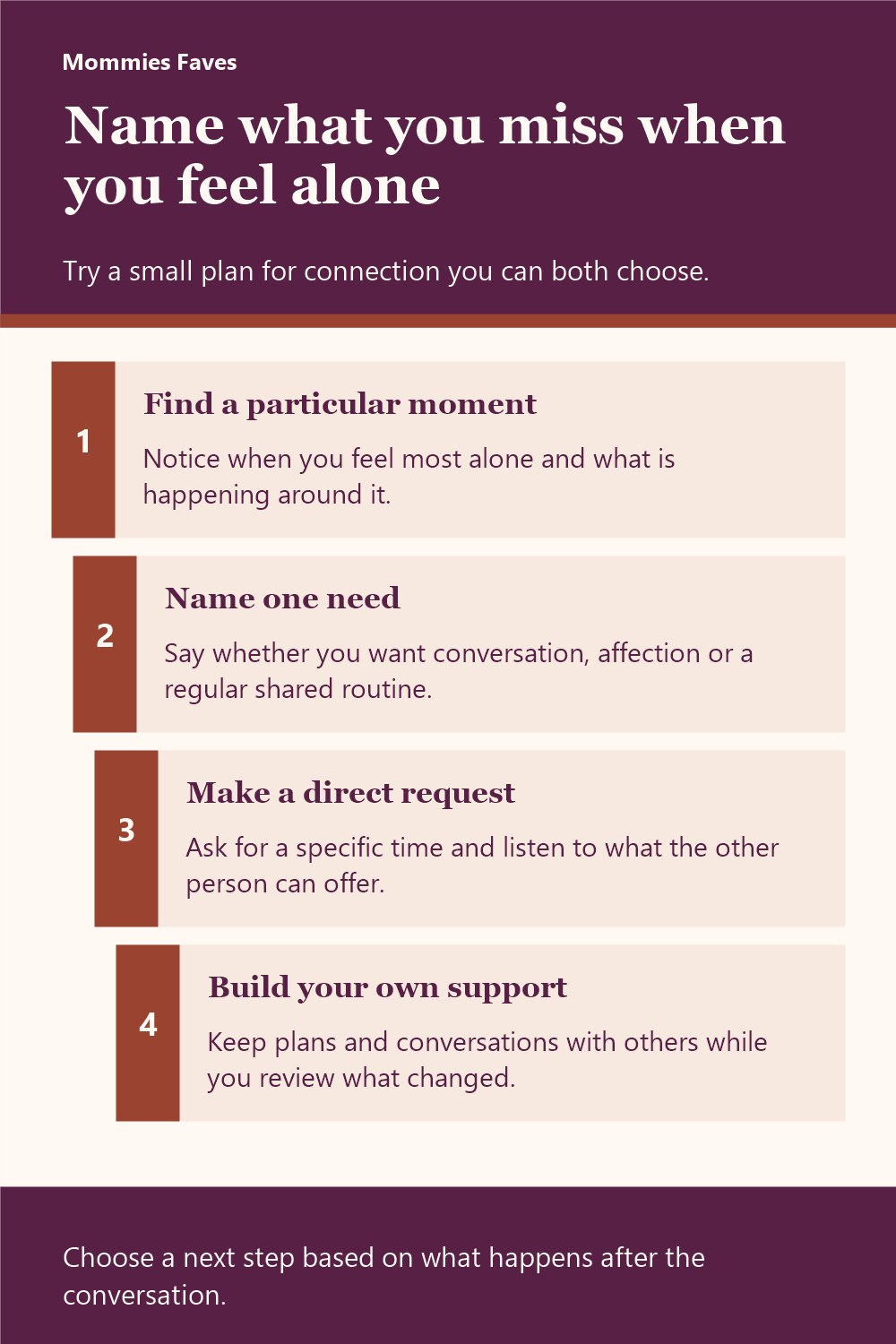
Name what you miss when you feel alone Try a small plan for connection you can both choose.
- Find a particular moment Notice when you feel most alone and what is happening around it.
- Name one need Say whether you want conversation, affection or a regular shared routine.
- Make a direct request Ask for a specific time and listen to what the other person can offer.
- Build your own support Keep plans and conversations with others while you review what changed.
Choose a next step based on what happens after the conversation.