
Small gestures can make a relationship feel more caring, but they cannot prove what another person feels. A smile, eye contact, nervousness or a change in posture can have many explanations. Pay more attention to what you both choose, communicate and follow through on.
These twenty ideas are ways to offer care and discuss what matters to you. They are not a scorecard for a partner to pass. Preferences, disability, health, culture and circumstances can shape how care is expressed; ask what is welcome rather than assuming one gesture suits everyone.
On this page
Comfort and attention
- Offer touch that is welcome. Ask whether a hug, hand-holding or sitting close would feel good. Someone may want company without physical contact. Respecting that answer is itself a caring action; a partner does not owe touch as proof of affection.
- Choose a thoughtful gift without creating a debt. A favourite snack, a short note or another small gesture can show attention. Consider the person’s preferences and your budget. Receiving a gift does not require someone to give affection, sex or forgiveness in return.
- Listen to what the person wants to share. Ask whether they would like listening, ideas or practical help. Choose a time when you can offer some attention. You can care and still need to pause a conversation or arrange another time to continue.
- Ask what affection means to each of you. A kiss, a warm greeting or a kind message may be meaningful. Discuss what you enjoy rather than checking whether someone smiles afterwards. There is no facial expression that a loving person must produce.
Love is respect’s guide to consent explains mutual choice as an ongoing part of a relationship. An earlier yes does not remove the need to consider what each person wants now.
Everyday thoughtfulness
- Remember what matters, without making memory a test. Note an important appointment or a preference someone has shared. Using a reminder is fine. Forgetting a detail does not settle whether someone cares; what happens when you raise it may tell you more.
- Make room when you are together. Ask whether it is a good time to talk, put aside a competing task if you can and explain when you need to leave. You do not need to read posture changes to know whether attention is available.
- Show curiosity about an interest. Ask what the person enjoys about a hobby or project. You can support their interest without sharing it or joining every activity. Leave room for each of you to enjoy some things separately.
- Discuss plans that affect both people. Ask about availability and wishes before making commitments on someone else’s behalf. A dependable plan for next weekend may be more useful than a vague promise about forever. Include work, rest and parenting responsibilities where relevant.
Repair and practical care
- Repair a mistake without demanding quick forgiveness. Acknowledge what you did, listen to its effect and say what you will change. An apology does not set a deadline for the other person’s feelings or require them to restore trust immediately.
- Respect time alone. Ask what contact feels comfortable during a busy day or a period of rest. Space does not automatically mean rejection. Agreeing on a realistic time to reconnect can be useful when both people want that.
- Offer a specific helpful action. “Would it help if I brought dinner?” is easier to answer than expecting someone to identify every task you could do. Ask before taking over; the person may prefer a different kind of help or none.
- Make attention comfortable. Some people listen best while walking, doing a quiet task or looking away. Do not require sustained eye contact as evidence of love or honesty. Ask what would make a conversation easier for both of you.
Privacy and choice
- Discuss introductions at a pace that works. Meeting friends or family can matter, but timing can involve privacy and complicated relationships. For parents, a new partner’s introduction to children needs particular thought. An introduction should not become a test someone must pass to prove commitment.
- Keep checking comfort around intimate touch. Being in a relationship does not create automatic permission. Ask, listen and stop when someone does not want to continue. A person may enjoy one form of affection and decline another, including within the same encounter.
- Share responsibilities explicitly. If you share a home or another commitment, discuss the tasks and each person’s capacity. Name who will do what and when. Avoid expecting one partner to anticipate every need, organise all the work and repeatedly ask for help.
- Offer support without taking control. Ask what would help before intervening in a disagreement or arranging something for the person. A welcome lift or agreed check-in differs from demanding location access, passwords or explanations for every independent choice.
Enjoyment and time together
- Show enjoyment in a way that feels natural. You might say you liked an evening, send a message afterwards or suggest meeting again. Nobody has to appear cheerful all the time. Stress, tiredness and quietness do not by themselves explain someone’s feelings about you.
- Leave room for differences. You do not have to mirror a partner’s gestures, opinions or habits to be close. Be curious about a different preference and discuss what each of you wants. Agreement is useful when it is freely reached.
- Allow nervousness without guessing its meaning. Blushing, fidgeting or stumbling over words does not establish romantic interest. If you want to know whether someone would like another date or a particular kind of contact, ask a clear question and respect the answer.
- Plan time you can both manage. A short walk, a shared meal or company during an errand can be worthwhile. Check whether the plan feels enjoyable and workable, including cost, travel and childcare. Time together should leave room for each person’s wider life.
Look at the wider pattern of care
Choose one idea to discuss: “I feel cared for when plans are confirmed. Could we agree on a time to check in?” You can appreciate a kind gesture while still addressing a pattern that hurts you. Occasional generosity does not make insults, intimidation or control acceptable.
You deserve care without having to decode every movement or prove that another person’s private feelings justify what you need. If worries about the relationship or the process of dating are becoming difficult to manage, choose support that fits that difficulty.
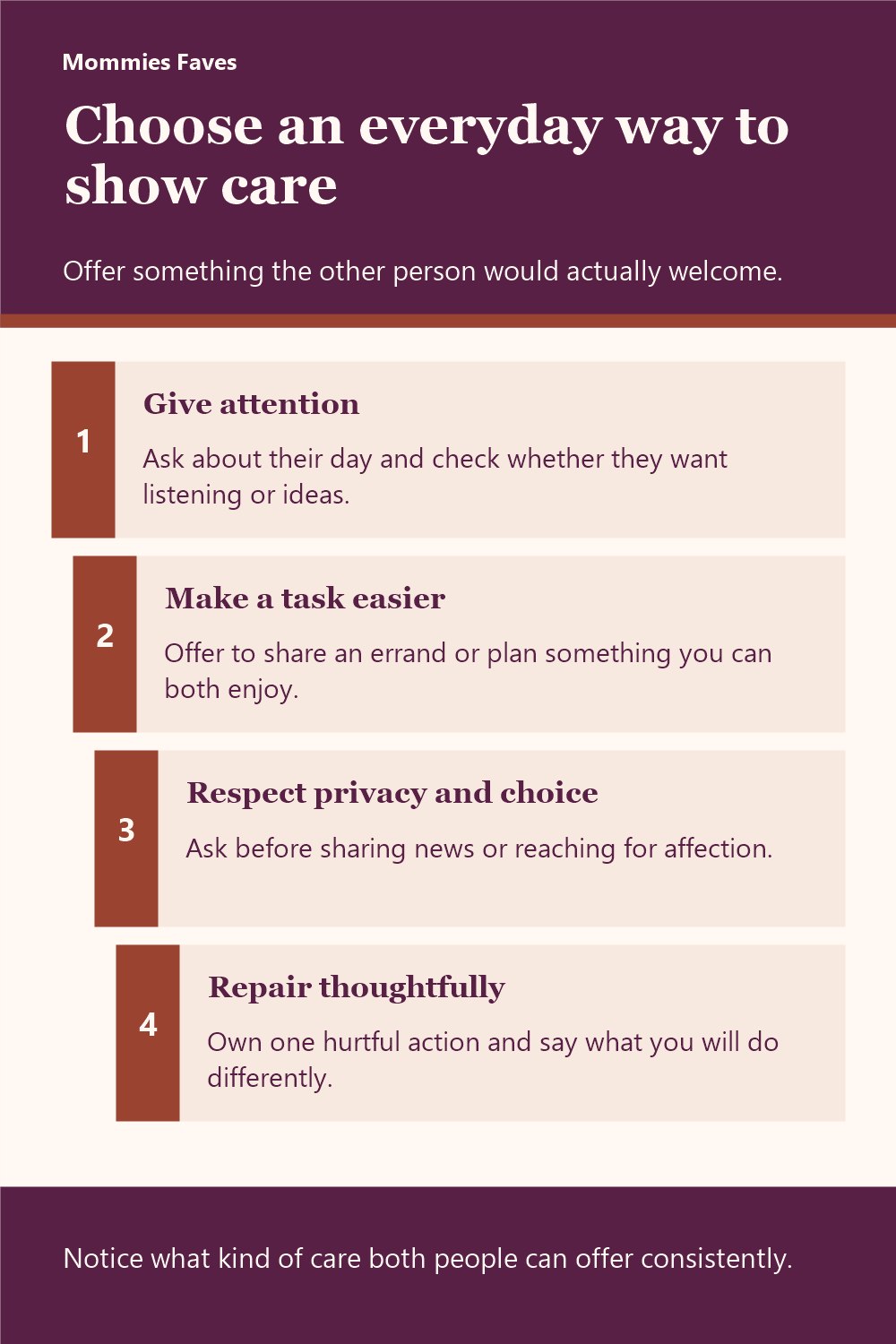
Read the infographic in text
Choose an everyday way to show care Offer something the other person would actually welcome.
- Give attention Ask about their day and check whether they want listening or ideas.
- Make a task easier Offer to share an errand or plan something you can both enjoy.
- Respect privacy and choice Ask before sharing news or reaching for affection.
- Repair thoughtfully Own one hurtful action and say what you will do differently.
Notice what kind of care both people can offer consistently.