

Dating a close friend can feel appealing and risky at the same time. You may already share humour, trust and a comfortable way of spending time together, while also worrying about losing an important friendship. Neither a rule against it nor a promise that friendship makes the best romance can decide the question for you.
Start with mutual interest, then talk about what each person wants. You can explore a possibility slowly, remain friends, or take some space if your feelings differ. None of those choices makes the friendship a failure.
On this page
Check whether the interest is mutual
Being close does not mean you know exactly what your friend thinks or feels. Affection, frequent messages and shared jokes can belong to a friendship. Rather than interpreting every gesture as a sign, consider one clear, low-pressure conversation.
You might say, “I have started to wonder about going on a date with you. Would that interest you? It is okay if you do not feel the same.” Pick a private moment when the person can answer freely, rather than making an announcement in front of your shared friends.
If the answer is no, accept it without bargaining or treating past kindness as a promise of romance. If the answer is uncertain, you can leave the invitation open for a discussion without repeatedly asking. You also do not have to wait indefinitely for someone to decide.
Talk about what dating would change
Friendship gives you some knowledge of a person, but it does not settle every question about being partners. Discuss what you are each looking for: occasional dates, an exclusive relationship, or time to find out. Do not assume a first date creates the same commitment for both people.
Pay attention to how you handle differences. Can you disagree respectfully, change a plan and acknowledge a mistake? Being familiar with someone should not require overlooking behaviour that troubles you. Equally, an ordinary difference in habits is something to discuss rather than proof that dating will fail.
If parenting is part of your life, friendship with you does not automatically make someone a family partner. Explain your existing commitments and keep decisions about introductions, childcare and your home at a pace that feels appropriate for your family.
Choose a comfortable pace
A date does not require kissing, sex or any other physical step. You can enjoy a new kind of connection while checking what each person wants. Prior closeness, a previous kiss or a long friendship does not replace present consent.
Love is respect’s guide to consent explains why agreement must be freely given and can change. A practical question can be as simple as, “Would you like to hold hands?” Make room for a comfortable no as well as a yes.
Knowing personal details about each other can create familiarity, but you still have a right to privacy. Talk about what may be shared with other people and what stays between you. Secrets told during the friendship should not become material for teasing, pressure or an argument.
Keep room for friendship and support
Keep other sources of companionship and support. When the person you usually turn to is also your partner, it can help to have another trusted friend, relative or independent support person to talk with. Share thoughtfully and avoid asking mutual friends to take sides.
Discuss how you want to handle shared groups, social plans and time apart. Dating does not mean either person must give up other friends. If jealousy appears, name the specific situation and what reassurance you would welcome rather than demanding constant access or control.
For example: “I felt unsure when everyone assumed we were together before we had talked about it. Can we decide what we want to tell the group?” A clear agreement about privacy or introductions can be more useful than trying to guess the correct behaviour.
Make room for either answer
There is a real possibility that dating will change the friendship. You cannot guarantee a return to exactly how things were, but you also cannot know in advance that a breakup would mean losing the person forever. Discuss how you might handle discomfort, a pause or an ending without making promises neither person can keep.
Choose one next step that both people want. That might be a clearly understood first date, a little time to think, or a decision to keep the relationship platonic. If your feelings are painful, you can request space kindly without making it a punishment for being turned down.
Notice how the connection feels as it develops. You are allowed to reconsider, and so is your friend. The useful question is whether the choice is mutual, respectful and workable for the people involved.
Read the infographic in text
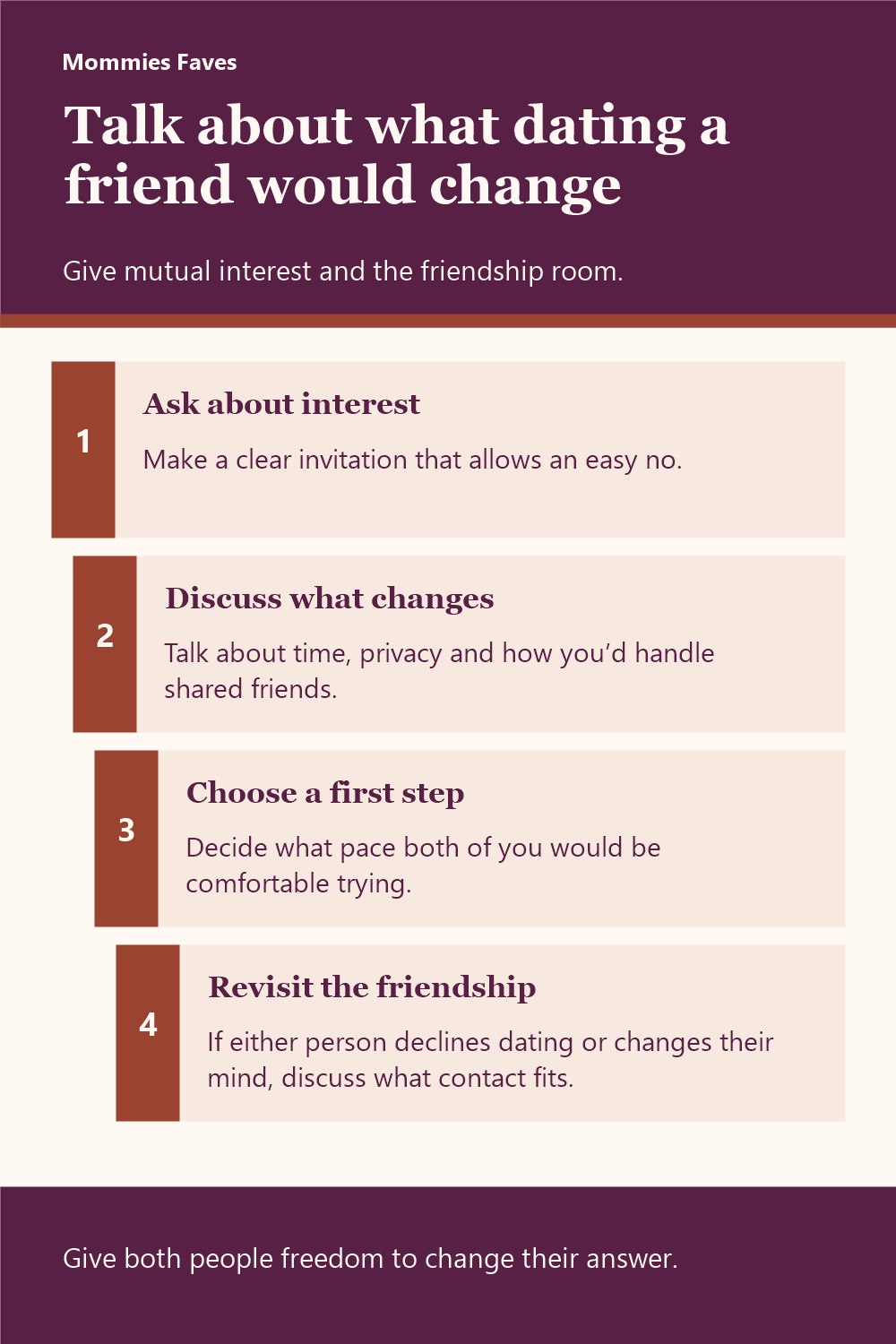
Talk about what dating a friend would change Give mutual interest and the friendship room.
- Ask about interest Make a clear invitation that allows an easy no.
- Discuss what changes Talk about time, privacy and how you’d handle shared friends.
- Choose a first step Decide what pace both of you would be comfortable trying.
- Revisit the friendship If either person declines dating or changes their mind, discuss what contact fits.
Give both people freedom to change their answer.