

Unreturned love can happen with a close friend, someone you’ve dated briefly, or a former partner. A feeling can matter to you without being shared by the other person. You’re allowed to be sad about that, and both people get to choose what happens next.
Whether you’re hoping for a relationship or need to say you don’t feel the same, clear words and workable boundaries can make the situation easier to navigate.
1. Recognise when the feelings are different
A friendship can include affection, regular messages and time alone without becoming romantic. Slow replies on their own tell you little. A direct answer, an existing relationship, or repeated refusals to meet can be enough information to stop waiting.
2. Ask once if it’s appropriate
If you don’t already know the answer and it feels appropriate to ask, try, “I’d be interested in a date. Is that something you’d want?” Ask in a way that leaves them room to decline. If they say no, avoid asking for more reasons or trying to change their mind.
3. Choose what contact works now
You can appreciate the friendship and still want a period of less contact. Try, “I value our friendship, but I’m going to skip our weekly coffee for a bit.” If you have to see each other at work or in a shared group, keep the contact practical and let them choose when to have personal conversations.
4. Make room for feelings without keeping watch
Mute updates for a while if checking them keeps reopening the question. Avoid arranging chance encounters or asking friends to keep tabs on the person. When you catch yourself wanting to check again, try calling a friend, going for a walk, or writing what you wish you could say in a note you won’t send.
5. Say no clearly and kindly if you’re the one who doesn’t feel it
Try, “I care about you as a friend. I don’t want a romantic relationship.” You don’t owe anyone a trial date. If you want to stay friends, give them room to decide whether and when that feels possible. If you feel unsafe or someone continues pressing after you decline, you can end contact or seek support.
6. Think about what you want from a mutual relationship
Once the feelings feel less urgent, ask what you liked about the connection and what you wished had been different. Perhaps you want regular conversation or more openness about future plans. You can look for those qualities without treating this person as the only way to find them.
7. Reach out if it is hard to cope alone
If sadness or urges to keep pursuing someone are disrupting your daily life, consider talking with a trusted person or a qualified mental health professional. If you think you might harm yourself soon, contact your local emergency service or a crisis line now. The World Health Organization’s guidance on getting support explains options for reaching out.
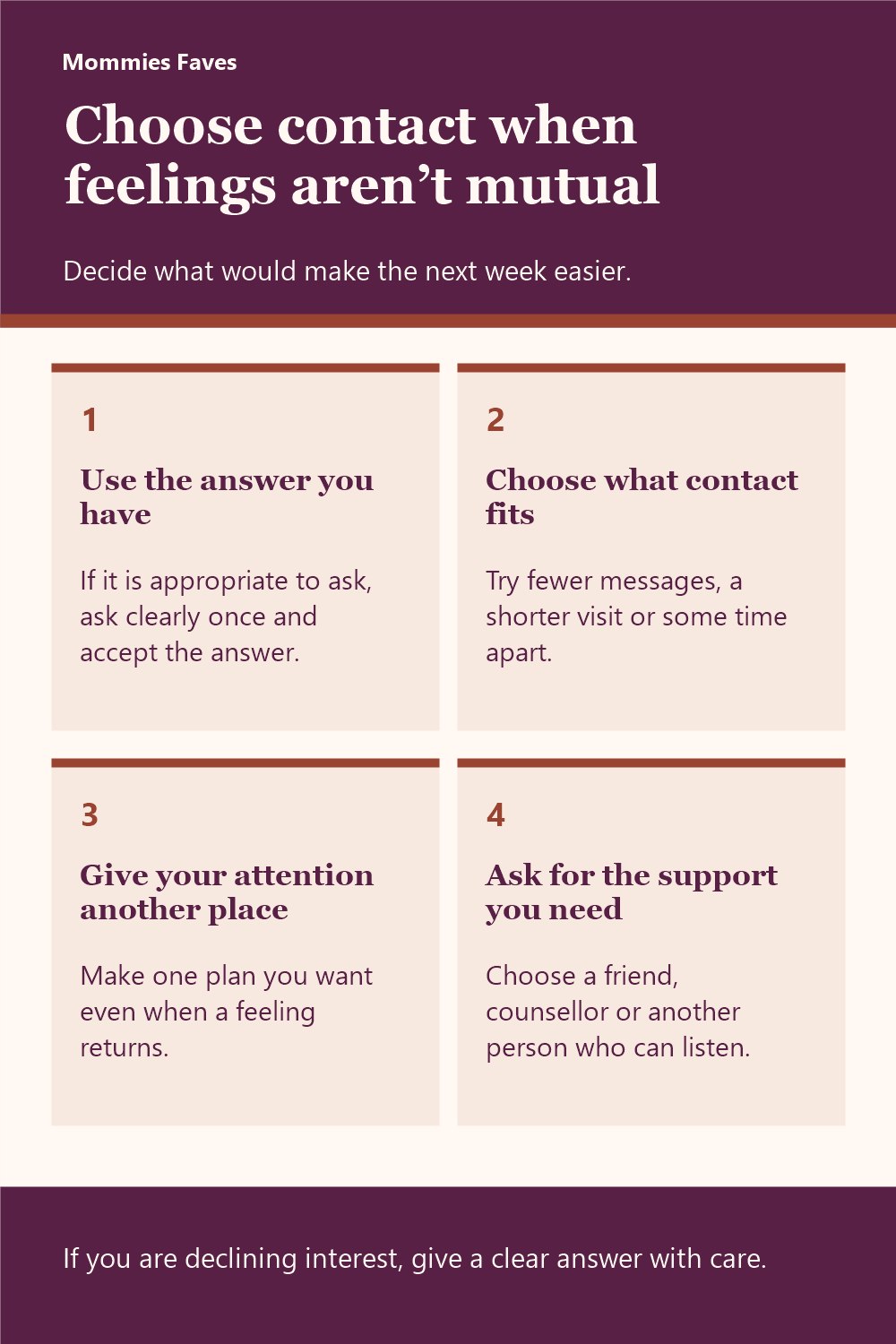
Read the infographic in text
Choose contact when feelings aren’t mutual Decide what would make the next week easier.
- Use the answer you have If it is appropriate to ask, ask clearly once and accept the answer.
- Choose what contact fits Try fewer messages, a shorter visit or some time apart.
- Give your attention another place Make one plan you want even when a feeling returns.
- Ask for the support you need Choose a friend, counsellor or another person who can listen.
If you are declining interest, give a clear answer with care.