
If you’re wondering whether your partner still loves you, you may be trying to understand why time together or conversations feel different. A change can have several explanations. You don’t have to determine someone else’s feelings before taking your own experience seriously.
Look at what actually happens when you ask for care, talk about a disagreement, or try to make a choice for yourself. If you feel threatened, controlled or afraid, it can be safer to get individual support before trying to work it out together.
1. Notice what prompted the worry
Name one thing that changed: fewer conversations, a string of cancelled plans or a disagreement you haven’t returned to. Searching for signs doesn’t tell you how your partner feels. A specific example gives you something you can ask about if it’s safe to do so.
2. Look at trust without checking devices
If trust feels shaky, ask what has changed and which agreement you’re worried about. You can want clarity without searching someone’s phone or email. You also don’t have to give anyone your passwords to prove that you’re trustworthy.
3. Take repeated put-downs seriously
A partner may disagree with you and still treat you with respect. Repeated insults, humiliation or criticism about your body deserve attention. Your worth doesn’t depend on convincing a partner to be kind. Talk with someone who can listen without judging.
4. Keep access to friends and family
A partner can say they miss spending time with you. Trying to decide who you’re allowed to see, monitoring your contact or punishing you for visiting someone is different. The National Domestic Violence Hotline’s warning signs explain how isolation and control can show up.
5. Protect your choices about money, belongings and touch
Taking money without agreement, restricting access to necessities or pressuring you into sex are serious concerns. You’re allowed to say no. If you fear what might happen when you set a limit, consider talking privately to a domestic abuse service about options.
6. Talk about the future if it feels safe
It’s possible to care about each other and want different things. Pick one decision you need to make, such as whether you want to live together or how much time you can spend as a couple. Give each person room to answer honestly.
7. Notice whether words and actions line up
If someone has broken an agreement, ask what you’d need to see before you could trust it again. An apology can matter. So can whether they acknowledge the impact and keep a new agreement over time.
8. Choose the kind of support you need
If you both feel safe and respected, you could agree on one change and a time to revisit it. If you feel afraid, threatened or controlled, get private support first. In the U.S., the National Domestic Violence Hotline can help you think through options; elsewhere, look for a local domestic abuse service. If you’re in immediate danger, call your local emergency number.
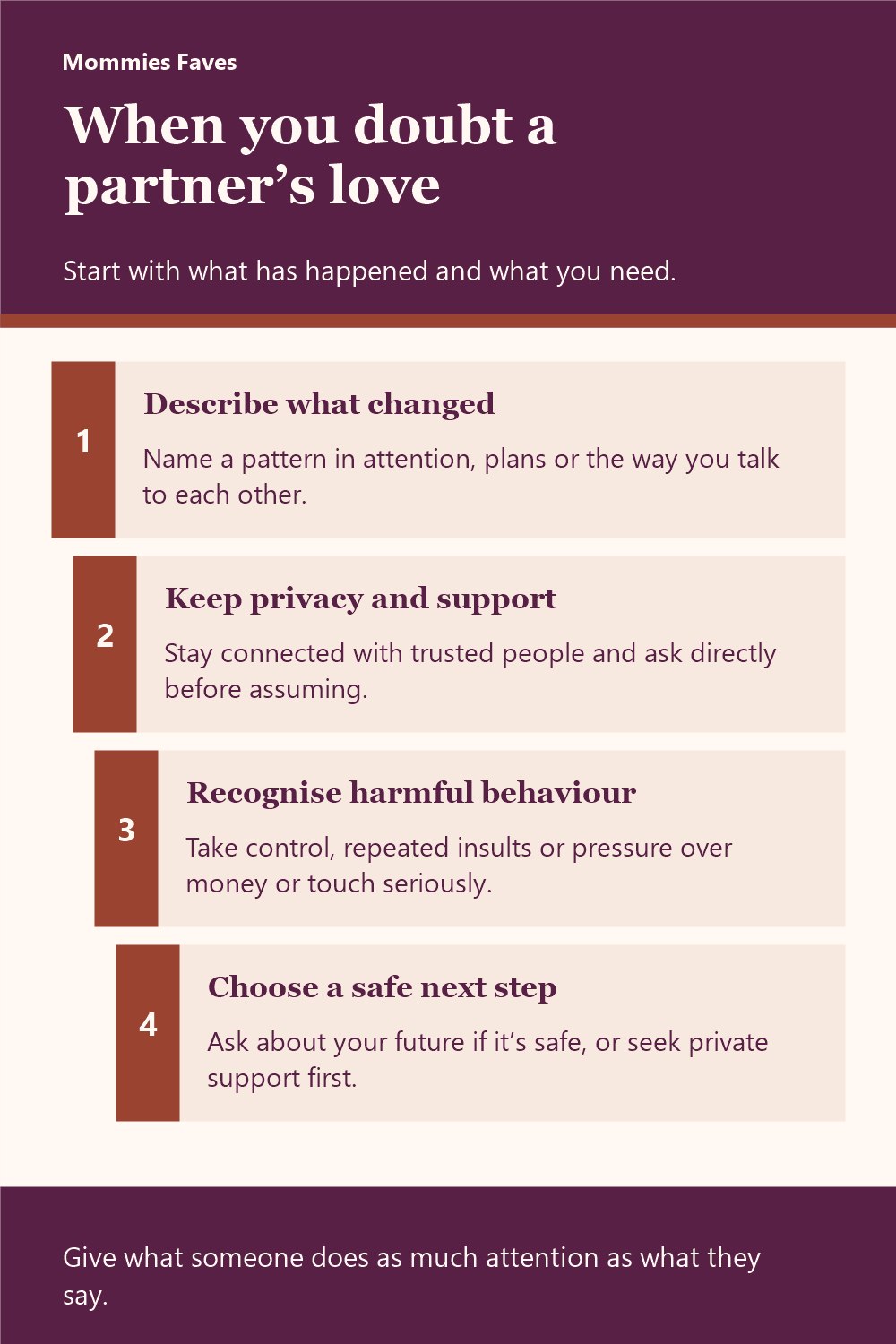
Read the infographic in text
When you doubt a partner’s love Start with what has happened and what you need.
- Describe what changed Name a pattern in attention, plans or the way you talk to each other.
- Keep privacy and support Stay connected with trusted people and ask directly before assuming.
- Recognise harmful behaviour Take control, repeated insults or pressure over money or touch seriously.
- Choose a safe next step Ask about your future if it’s safe, or seek private support first.
Give what someone does as much attention as what they say.