

If you find out the person you’re dating is married, it’s understandable to feel attached, hurt or confused at the same time. Start with what’s true today: what they have told you, what agreements everyone has made, and what kind of relationship you want.
Being separated, being in an agreed open marriage and hiding a relationship from a spouse are different situations. You can ask direct questions, take a break or end the relationship even if you never get all the answers.
1. Find out what the marriage means in practice
Ask for specifics: “Are you still together? If you’re separated, what does that mean day to day? What agreements do you have about seeing other people?” If they say their marriage is open, ask what their spouse knows and what they have agreed to. Privacy can be part of an agreement. Being asked to lie about your relationship is a different matter.
If you only learned about the marriage after you started dating, that omission may change what you’re willing to agree to. You don’t have to investigate their spouse or try to settle a disagreement between them to decide you’ve heard enough.
2. Decide what you need now
Picture your relationship as it is, with the actual time you spend together, how you make plans and what you’re free to say about it. Would you choose it if nothing changed for the next few months? Pay attention if you’re always waiting for last-minute plans, giving up time with friends or relying on financial help that makes it harder to walk away.
Name the change you need in plain language: “I want a relationship I can talk about openly,” or “I’m looking for exclusivity, and you can’t offer it.” A promise about the future can’t tell you what’s available now.
3. Set a boundary you can keep
A boundary is something you can act on. For example: “I’m pausing dates while you work out your separation. If that changes, I can decide then whether I’m interested.” You don’t have to wait for a deadline or try to make someone choose between you and their spouse.
If you’re considering continuing, discuss what you both understand about exclusivity, safer sex and privacy before making further commitments. If you still can’t have a clear conversation, you can pause without negotiating the details.
4. Make room for support if you end it
A short message can be enough: “This situation doesn’t work for me. I’m ending our relationship and I’m not available to discuss changing my mind.” You don’t owe an in-person conversation. If you’re afraid of their reaction, ask someone you trust for support and choose a way to leave that protects you.
Expect your feelings to take time to catch up with your decision. Make a plan for the times you used to spend together, tell one person what kind of support you’d like, and give yourself permission to mute contact if messages keep pulling you back in.
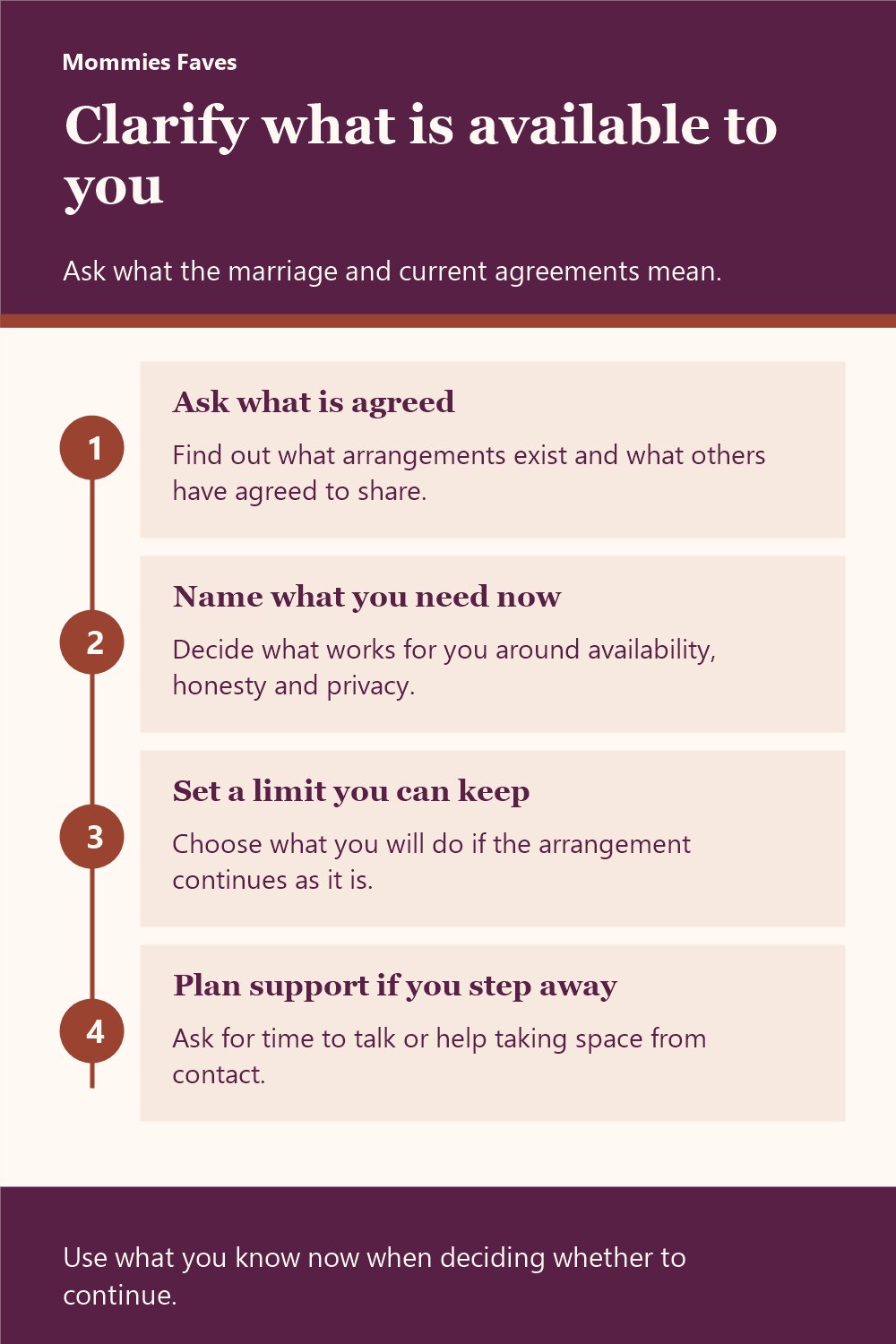
Read the infographic in text
Clarify what is available to you Ask what the marriage and current agreements mean.
- Ask what is agreed Find out what arrangements exist and what others have agreed to share.
- Name what you need now Decide what works for you around availability, honesty and privacy.
- Set a limit you can keep Choose what you will do if the arrangement continues as it is.
- Plan support if you step away Ask for time to talk or help taking space from contact.
Use what you know now when deciding whether to continue.