

Feeling like an afterthought can be lonely, especially if you’re handling the planning, the check-ins, or decisions that affect both of you. Work, childcare and family needs can interrupt time together. What matters is how both of you handle those demands and whether your needs can be part of the conversation.
Start with one pattern you can name. That gives you something specific to talk about and a way to see whether anything changes.
1. Name the pattern, rather than guessing why it happens
Write down a recent example: “We cancelled dinner three times this month, and I was the one who tried to reschedule each time.” That is more useful than assuming what your partner cares about. Notice if they usually let you know, take responsibility and suggest another plan.
2. Ask to be included in shared decisions
A change to working hours, a new expense or a commitment to extended family can affect both of you. Ask which decisions you need to discuss in advance. “Could we check the childcare calendar before either of us commits to extra evenings?” is a request you can both act on.
3. Say what would help you feel connected
You might want uninterrupted conversation, more affection that both people enjoy, or a regular time to plan the week. Make one concrete request: “Would you put your phone away during dinner so we can catch up?” Ask what your partner needs, too.
4. Watch what happens after the conversation
Pick a time to revisit the plan. Notice whether both people make an effort or whether the agreement disappears once the conversation ends. If the arrangement doesn’t work, you can revise it together. Repeatedly dismissing a concern gives you information about what the relationship is offering.
5. Decide what you can keep offering
You can set a limit on lending money, doing extra chores or keeping evenings open without a plan. You can also decline sex or touch at any time. If you’re being pressured or feel afraid of the response to a boundary, talk privately with someone you trust or a support service before raising it together.
You don’t have to convince someone you deserve care. If a pattern continues and the relationship no longer works for you, it’s reasonable to consider what stepping back would look like.
Read the infographic in text
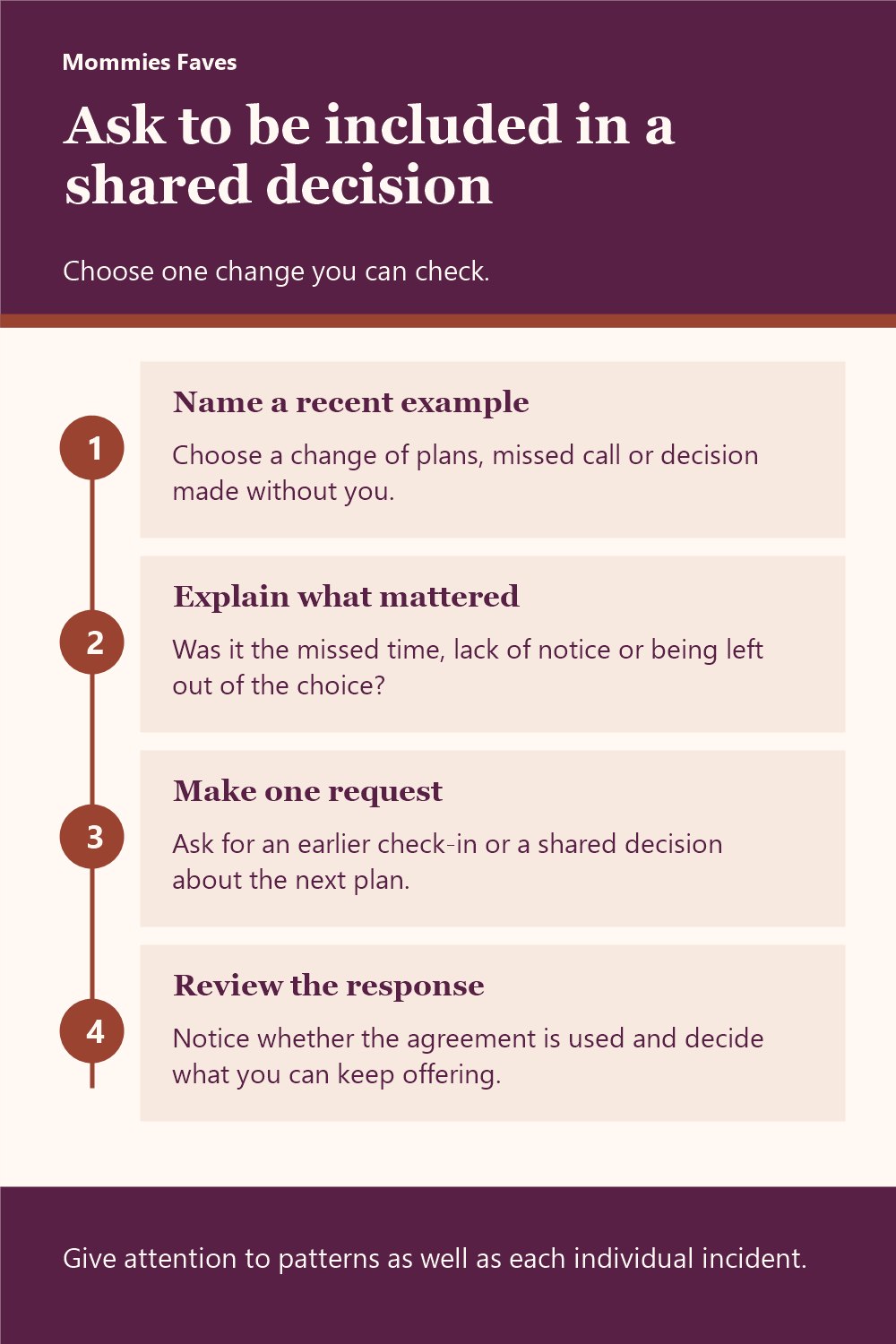
Ask to be included in a shared decision Choose one change you can check.
- Name a recent example Choose a change of plans, missed call or decision made without you.
- Explain what mattered Was it the missed time, lack of notice or being left out of the choice?
- Make one request Ask for an earlier check-in or a shared decision about the next plan.
- Review the response Notice whether the agreement is used and decide what you can keep offering.
Give attention to patterns as well as each individual incident.