

When telling children about a divorce, give them a clear explanation and one concrete thing they can count on next. They may have questions about school, where they’ll sleep or who will pick them up. You can answer what you know and tell them when you’ll have more information.
Children can be sad, angry, quiet or relieved, and their reactions may change. Make space for short conversations over time so they don’t have to take it all in at once.
1. Tell them what’s changing and what’s staying
Choose a time when your children won’t have to rush off. If both parents can speak calmly and safely, tell them together. Otherwise, a calm, honest explanation from one parent is enough. “We’ve decided to live in separate homes. It’s an adult decision. You didn’t cause it, and it’s not your job to fix it.”
Add details they can use, such as “I’ll pick you up from school on Monday like usual.” Use short, concrete language with younger children. Older children may want more detail about schedules, friends or travel. They don’t need private details of your marriage.
2. Listen without asking for a particular reaction
Try “What’s the first thing you’re wondering about?” If your child doesn’t want to talk, tell them they can ask later. If they’re angry or relieved, let them tell you why without making them reassure you or asking them to choose a side.
When you don’t know an answer, say so and name when you’ll check in again: “I don’t know what weekends will look like yet. I’ll tell you what I know on Friday.” Then follow through, even if the plan hasn’t changed.
3. Protect a few familiar routines
Keep what you can of bedtime, school activities, time with friends and familiar family rituals. You don’t have to make two homes identical. Start with what matters most to your child, such as knowing when the next pickup is or being able to bring a favourite comfort item.
A simple calendar or note for the week can help. If plans change, tell your child directly and let them know what will happen instead. Offer small choices where possible, such as which book to pack. Adults still make the decisions about where children live.
4. Keep adult disagreements away from children
Don’t send messages through children, ask them to report on the other household or argue at handoffs. If your child says they heard you argue, you can say, “That was an adult disagreement. You shouldn’t have had to hear it. You don’t have to solve it.”
Share practical updates with the other parent directly when it’s safe. If there are threats, abuse or existing safety arrangements, prioritize your and your child’s safety rather than trying to manage a joint conversation.
5. Check in again after the first few weeks
Ask what feels easier and what still feels hard. A teacher or school counsellor can be another trusted adult and may notice changes you don’t see at home. If trouble with sleep, school or ordinary activities persists or worsens, ask your child’s pediatrician or another qualified professional for help.
The American Academy of Pediatrics’ guide to helping children adjust to divorce explains how reactions can vary by age. Pick one small thing you can make more predictable this week and ask your child whether it helps.
Read the infographic in text
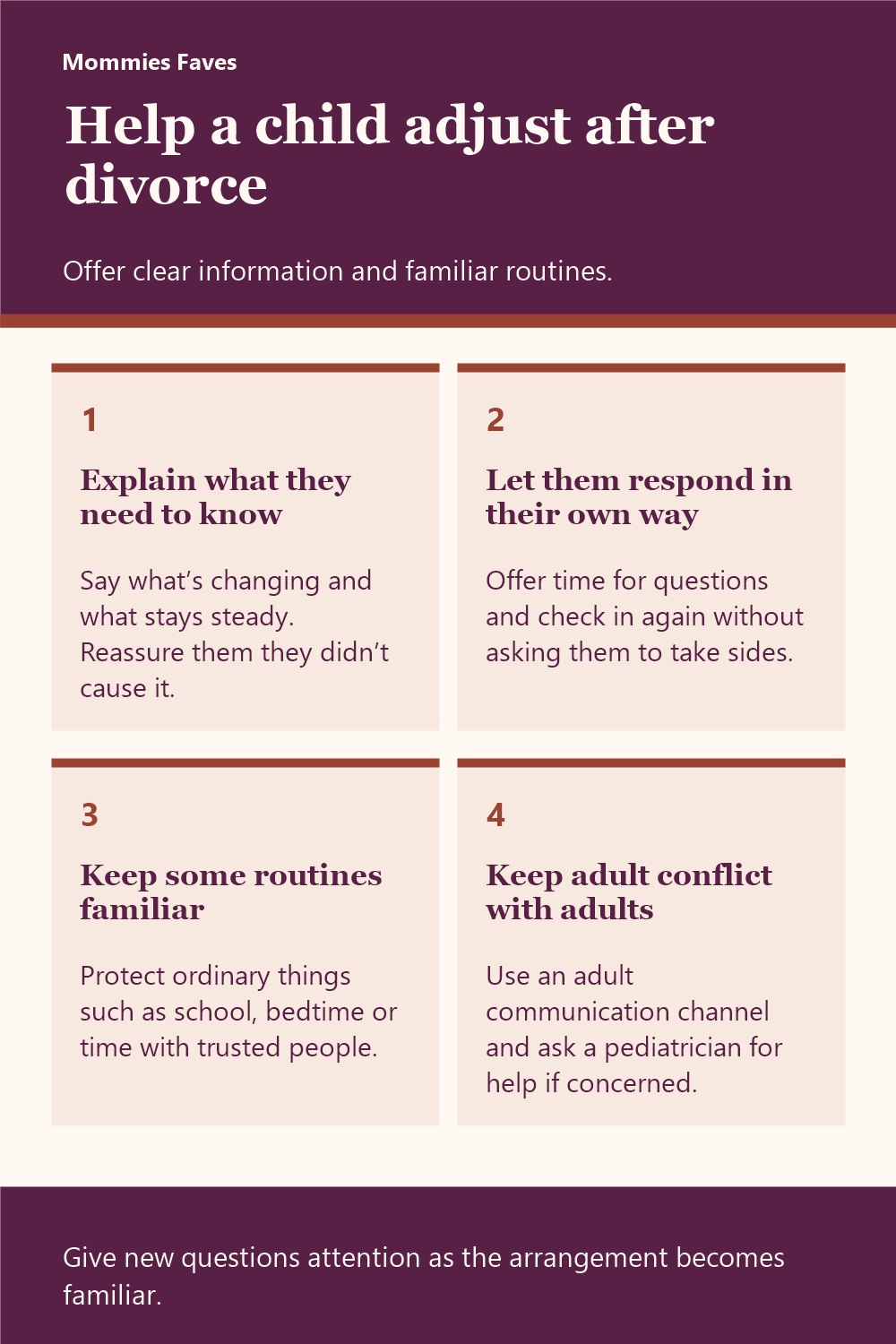
Help a child adjust after divorce Offer clear information and familiar routines.
- Explain what they need to know Say what’s changing and what stays steady. Reassure them they didn’t cause it.
- Let them respond in their own way Offer time for questions and check in again without asking them to take sides.
- Keep some routines familiar Protect ordinary things such as school, bedtime or time with trusted people.
- Keep adult conflict with adults Use an adult communication channel and ask a pediatrician for help if concerned.
Give new questions attention as the arrangement becomes familiar.