

Finding the “perfect” love can mean hoping for a relationship where you feel wanted, respected and able to be yourself. No person will meet every wish or remove every difficulty from your life. A more useful question is whether the relationship you are building fits the life you have and the future you want.
You do not have to become an ideal partner before you deserve care. You can take responsibility for your choices while expecting the other person to do the same. Start with a few things you want to understand, rather than trying to prove that someone is “the one.”
On this page
Describe what a good fit means to you
Write down three things that matter in daily life. You might want a partner who respects your parenting responsibilities, keeps agreed plans and can disagree without insults. Separate these essentials from preferences such as enjoying the same music or choosing the same holiday destination.
Wanting affection, reassurance or dependable contact does not make you a problem. Describe the need clearly: “I enjoy hearing from you between dates. What kind of contact works for you?” Then consider the answer, including whether it offers enough connection for you.
If you find yourself spending beyond your comfort, agreeing with everything or repeatedly asking for reassurance, look at that particular pattern. You can change an action without calling yourself “needy” or deciding you caused someone else’s dishonesty. A request also leaves the other person free to decline.
Make dating fit your actual life
A workable relationship needs room for responsibilities and limits. If you are parenting after divorce, a free evening may depend on childcare, school events or a changing schedule. You can explain your availability without apologising for having a family or promising access to your children.
Living with a physical or mental health difficulty does not automatically rule out dating. Consider the time, energy, access arrangements or support you want. You decide what personal information to share and when; you do not owe a new date a complete health history.
Choose dates within your own budget. A walk, a short coffee or a free local event may suit you better than an expensive evening. You can say, “That is outside my budget; would you like to try this instead?” You do not need to buy approval.
Work can be frustrating without making you an unsuitable partner. Consider what you can realistically offer after a demanding shift. A specific plan, such as meeting on your day off, is more useful than promising constant availability or abruptly changing jobs to impress someone.
Keep the people and activities that matter to you. Dating can be one part of your week alongside friendships, rest and family life. You can also choose a pause when adding another commitment feels like too much.
Meet people at a pace you can choose
Try a setting you would enjoy even without a romantic outcome: a community activity, a shared interest or an introduction you welcome. Common interests can give you something to talk about, but you do not need identical hobbies to be compatible.
If you use an app, state relevant intentions honestly and keep early expectations manageable. A pleasant exchange is a starting point, not a commitment. You can suggest a short meeting, decline an invitation or stop messaging someone who keeps pushing past your limits.
Learn about compatibility through conversation
Ask about one relevant subject at a time. What does each person want from dating? How often would you like to meet? What would exclusivity mean to you? Love is respect explains boundaries and expectations, including the importance of discussing assumptions rather than expecting a partner to read your mind.
Keep larger decisions open until you have enough information. Moving in, combining money or introducing a partner to children deserve their own conversations. You can enjoy the present without agreeing to a future arrangement you do not want.
Notice how everyday differences are handled. Can you ask to change a plan? Can either person say no? Does an apology lead to a relevant change? Disagreement is not permission for threats, ridicule or control, and you do not have to treat harmful behaviour as an ordinary imperfection.
Choose the next step from what you know
You might arrange another date, clarify an uncertainty, slow down or end contact. Attraction does not create an obligation to have sex, and a relationship does not need to follow someone else’s timetable. What matters is that both people freely want the arrangement they are making.
If something does not fit, you have learned something useful; you have not failed a test of lovability. Make your next choice from the actual relationship, your wishes and the way you are treated. You can want love while keeping a life that belongs to you.
Read the infographic in text
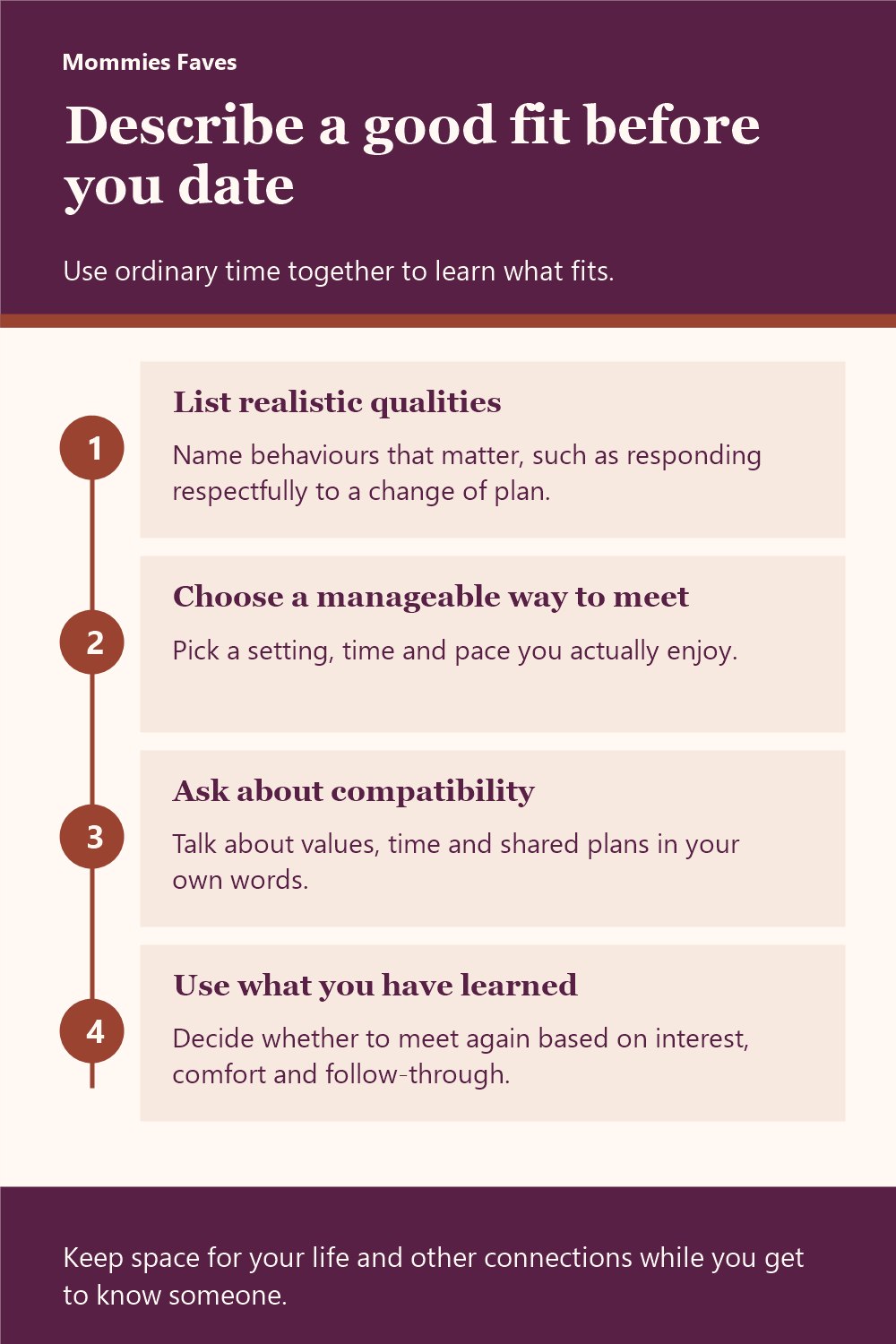
Describe a good fit before you date Use ordinary time together to learn what fits.
- List realistic qualities Name behaviours that matter, such as responding respectfully to a change of plan.
- Choose a manageable way to meet Pick a setting, time and pace you actually enjoy.
- Ask about compatibility Talk about values, time and shared plans in your own words.
- Use what you have learned Decide whether to meet again based on interest, comfort and follow-through.
Keep space for your life and other connections while you get to know someone.