

Authentic intimacy means having room to be yourself while choosing the kind of closeness you both want. It does not require sharing every thought, having sex or moving at the same pace in every part of your relationship. You can care deeply about someone and still need privacy, time or a different way to connect.
If opening up feels difficult, start with a small question: what would make this particular interaction more comfortable? The answer may involve a clearer invitation, a more considerate response or permission to leave a subject for another day.
On this page
Choose the closeness you want
Closeness can include talking honestly, enjoying an activity, sharing affection or simply feeling comfortable together. Sexual contact is one possibility when both people want it; it is not a requirement that every relationship must meet.
Ask about a specific preference rather than assuming that love provides permission. “Would you like a hug?” or “Would you rather talk or have some quiet company?” gives the other person a real choice.
RAINN’s guide to consent explains that agreement must be freely given and ongoing. Past intimacy does not settle what someone wants now. Stop and check in if a person hesitates, pulls away or changes their mind.
Share at a comfortable pace
Try sharing something manageable: a preference, a concern about the week or an activity you would enjoy together. You do not need to begin with your most painful experience to demonstrate trust.
You might say, “I want to tell you a little about this, but I do not want advice yet.” If you are listening, ask what would help and avoid pressing for details. You can acknowledge a feeling without claiming to know exactly how it feels.
Notice the response. Does your partner listen, respect a pause and keep private information private? Repeated mockery, pressure or using a disclosure against you is a reason to reconsider what you share and seek support.
Being reserved does not by itself establish trauma, low self-esteem or a commitment problem. People differ in how they express affection and process feelings. Discuss the difference without making one person’s preferred pace the standard.
Keep privacy and honesty together
Privacy can coexist with intimacy. Separate passwords, time alone, private conversations with friends or a preference to use the bathroom alone do not measure how authentic your relationship is.
Be clear about information that affects a shared agreement. For example, discuss what exclusivity means, how you will manage joint commitments and what contact you each expect. Honest agreement is more useful than assuming you should automatically know everything.
Either person can decline a question or ask to return to it. If a subject is essential to a decision you are making together, explain why you need clarity and decide what you can reasonably agree to while it remains unresolved.
Make connection practical
Choose time together that fits your actual lives. A short conversation after a meal, a shared walk or making something together can be enough. If you are parenting or caring for others, a simple plan may be more workable than a long date.
Offer an invitation with room for an alternative: “Would you like half an hour together tonight, or would tomorrow suit you better?” Shared time should not require one person to absorb all the chores or care work first.
Check whether the activity feels connecting to both of you. One person may enjoy a deep conversation while another feels closer during a familiar activity. You can vary the approach instead of deciding that only one kind of interaction counts.
If a conversation becomes tense, pause where it is safe to do so and agree how to return. A break can protect the conversation; disappearing indefinitely or punishing a request for space creates another difficulty.
Find support without pressure
If a past experience or present concern makes closeness distressing, consider qualified individual support at your own pace. You do not have to disclose the experience to a partner before seeking help, and support should not require promising more sexual contact.
Couples counselling may help you explore a difference when both people freely want it and feel safe participating. If you fear threats, coercion or retaliation, seek confidential individual advice about safety first.
Ask what is becoming more comfortable and what still needs to change. Authentic intimacy develops through choices both people can make freely. It leaves room to say yes, no, later or something different without having to prove your love.
Read the infographic in text
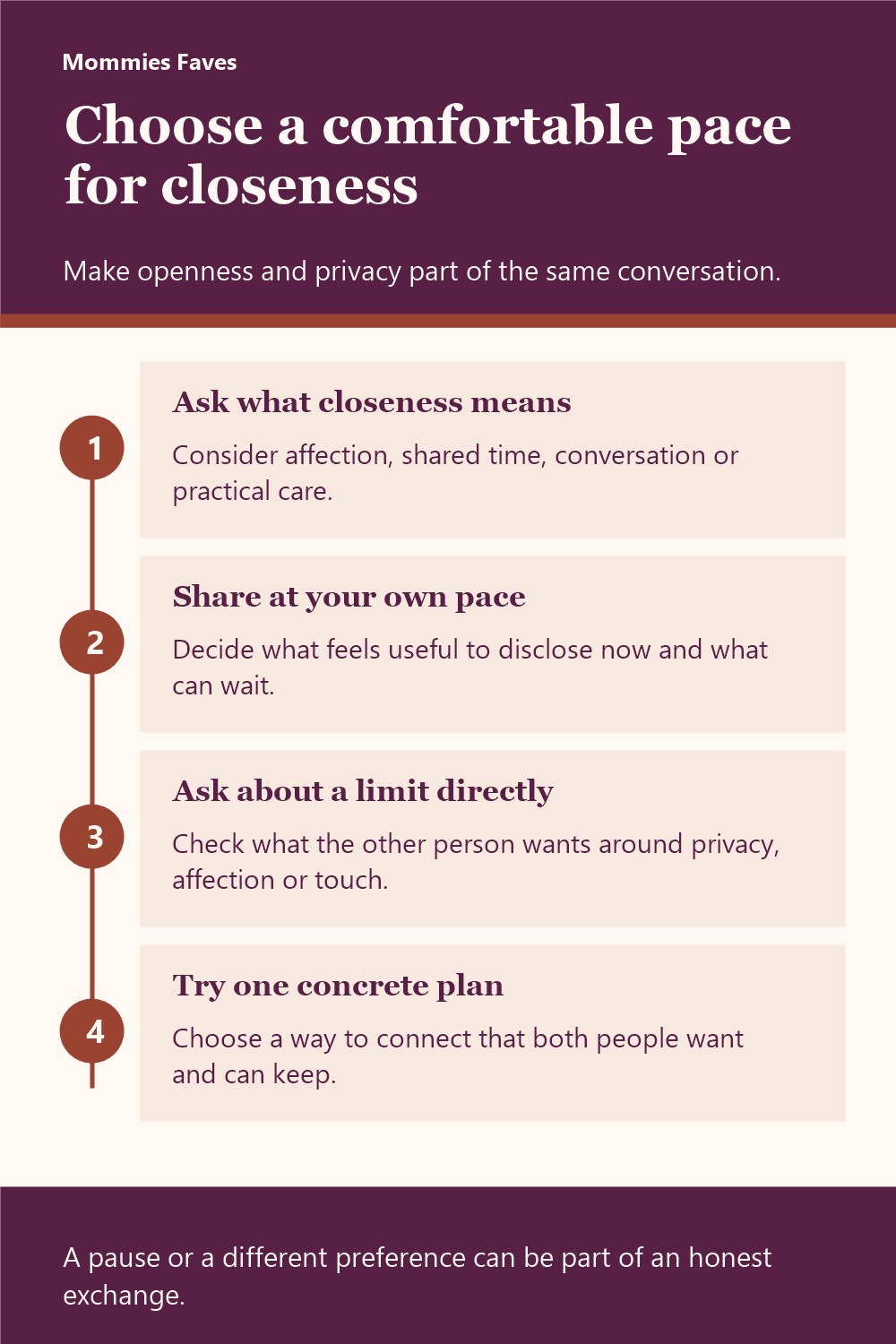
Choose a comfortable pace for closeness Make openness and privacy part of the same conversation.
- Ask what closeness means Consider affection, shared time, conversation or practical care.
- Share at your own pace Decide what feels useful to disclose now and what can wait.
- Ask about a limit directly Check what the other person wants around privacy, affection or touch.
- Try one concrete plan Choose a way to connect that both people want and can keep.
A pause or a different preference can be part of an honest exchange.