

When a friendship starts to feel different, you may wonder whether he likes you romantically or simply enjoys being close. More messages, an invitation or a long conversation can leave you hopeful and uncertain at the same time.
You do not have to decode every gesture before deciding what you want to do. Consider your own wishes, put the behaviour in context and, when you feel ready, ask a question that leaves room for an honest answer.
On this page
1. Decide what you want to ask
Start with your own interest. Would you like a date, a relationship, a conversation about a change you have noticed, or some space to understand your feelings? You do not need to be certain about the whole future to ask about one next step.
Spending more time together can mean that a friendship is growing. It may also accompany romantic interest, but an invitation to a film or party does not settle which kind of connection he wants. Consider whether you would enjoy the invitation as a friend, rather than treating attendance as a hidden agreement to date.
Plans months ahead may show that someone expects you to remain in their life. They do not establish romance or exclusivity. If a plan matters to you, clarify what is actually being proposed: a group trip, a friendly visit or a date.
If uncertainty is taking up much of your attention, you can choose a modest next step. A direct invitation often gives you more useful information than collecting more signs: “I’d enjoy taking you out on a date. Would you be interested?”
2. Keep touch and consent separate from guesses
A hand on your shoulder, a hug or sitting close can have different meanings for different people. Notice your own comfort and ask before changing the kind of contact between you. Friendship, previous affection or a date does not automatically imply permission for further touch.
What feels like sexual energy to you is your experience of the moment; it cannot establish what he wants. If you would like to kiss him, ask clearly and leave room for a no. If you do not want contact, you can say so without first working out whether he intended to flirt.
For example, “I’m comfortable with a hug, but I don’t want more than that” states a limit. How he responds matters. Pressure, repeated attempts after a refusal or making you feel guilty should not be treated as evidence of strong feelings.
3. Put attention and introductions in context
Meeting colleagues or being invited to an event can help you learn about each other’s lives. Some people include friends widely; others are private even when dating. An introduction is an opportunity to get to know someone, rather than a reliable measure of romantic intent.
The same applies to meeting family. You might be introduced as a valued friend, a potential date or simply someone attending a gathering. If the role feels unclear, ask instead of assuming that family approval means you are becoming a couple.
Wanting frequent company may reflect closeness, shared interests or a change in circumstances. It does not oblige you to provide more time than you have. Work, children and other responsibilities can affect both people’s availability, even when interest is mutual.
One-to-one time can be part of friendship too. If you would prefer to know whether an invitation is a date, you can ask, “Were you thinking of this as a date or as friends spending time together?” You are allowed to need clarity before arranging childcare, travel or an evening around it.
4. Have an honest conversation about the friendship
You can value the friendship and still talk about wanting something different. Choose a time when neither person is rushed or put on the spot in front of others. Keep the question focused on your interest, without presenting a list of things he has done as proof that he must feel the same way.
More texting or calling may make the connection feel closer. Reply speed, late-night messages or how often he checks in cannot answer whether he wants a relationship. Ask about the relationship itself rather than testing whether he becomes anxious when you stop responding.
A possible opening is, “I’ve started to feel interested in more than friendship. Would you like to go on a date, or do you want to keep this as friendship?” You can acknowledge that you may need a little time after the answer. Avoid promising that nothing could change if you do not know how you will feel.
Listen without trying to negotiate a different answer. If he is unsure, you can ask what he means and decide how much uncertainty suits you. “I don’t want to keep treating this as a possibility without a clear yes” is a limit you can set for yourself.
The NHS guidance on healthy relationships includes listening and boundaries. Those ideas can help you talk honestly while keeping room for each person’s needs.
5. Leave room for either answer
If the interest is mutual, begin with a plan you both want and can realistically keep. Agree that it is a date rather than assuming you have already become partners. You can discuss pace, privacy and what you want to tell other people as the situation develops.
If he wants friendship, accept that answer. You may choose to remain friends, reduce contact for a while or step back. You do not owe the same level of closeness while you manage a disappointment, and he does not owe romance in exchange for the friendship.
Criticising people you date or appearing jealous does not prove that he loves you. Ask about a specific concern if you want to understand it, and keep your own decisions. A friend can express a concern respectfully without controlling who you see or requiring an explanation for every plan.
Inside jokes and a familiar way of talking can be meaningful parts of friendship. They are worth enjoying without using them as a promise of romance. A clear answer, freely made choices and respect for limits give you more to work with than trying to find the perfect sign.
Read the infographic in text
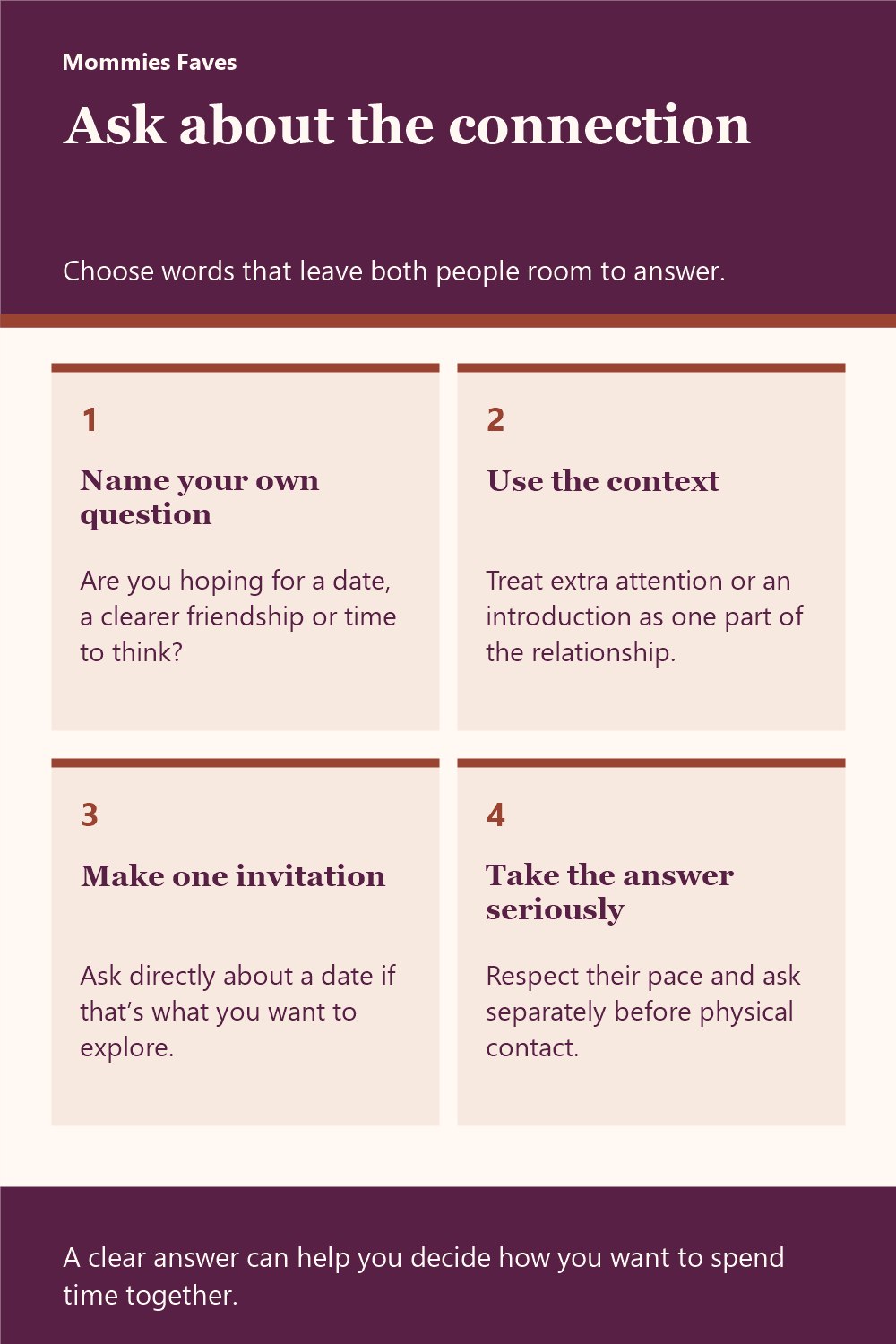
Ask about the connection Choose words that leave both people room to answer.
- Name your own question Are you hoping for a date, a clearer friendship or time to think?
- Use the context Treat extra attention or an introduction as one part of the relationship.
- Make one invitation Ask directly about a date if that’s what you want to explore.
- Take the answer seriously Respect their pace and ask separately before physical contact.
A clear answer can help you decide how you want to spend time together.