

After discovering cheating, you may feel hurt, angry, numb or uncertain about what you want. You do not have to choose forgiveness, reconciliation or separation immediately to prove you are strong, reasonable or loving.
Start with what you need now: space, reliable information, practical support or safety. Forgiving someone and continuing a relationship are separate choices. Neither requires pretending that the breach of trust did not happen.
On this page
1. Make room before deciding
You might need to end a conversation for the evening, arrange somewhere comfortable to stay or ask someone you trust to listen. Choose what fits your circumstances. Space does not have to become a public announcement or a final decision about the relationship.
Consider immediate shared responsibilities such as childcare, work and bills. A temporary practical agreement can help you manage those tasks while you think. It does not establish forgiveness or require emotional closeness.
If you feel frightened, threatened or pressured into sex or staying, seek individual safety support. You do not have to arrange a confrontation or joint counseling before getting help. If someone is in immediate danger, contact local emergency services when safe.
2. Ask questions that affect your choices
People have different agreements about exclusivity and intimacy. Identify the agreement you understood and what was breached. A partner should not use a technical distinction about whether something “counts” to dismiss deception or an agreement they made.
You can ask about ongoing contact, relevant financial commitments and what information affects your next decisions. You do not need every intimate detail or an account delivered in one exhausting conversation. It is okay to pause or decide some questions can wait.
Information about sexual contact may affect health decisions. You can speak privately with a qualified clinician about your own care without waiting for your partner to agree. Avoid relying on reassurances about someone’s appearance or a guessed risk.
Think carefully before contacting the other person, searching private accounts or sharing accusations publicly. Those actions may bring additional risks and do not guarantee a reliable answer. You can make a decision about your relationship without conducting an investigation into everyone involved.
3. Look for responsibility and follow-through
Relationship difficulties can be discussed without making you responsible for another person’s decision to deceive you. A claim that you were insufficiently affectionate, attractive or available does not transfer responsibility for that decision.
Notice whether your partner can acknowledge what happened without demanding quick forgiveness. Useful questions include whether the breach is continuing, whether they respect your request for space and whether practical promises are kept.
An apology, tears or a reassuring label cannot guarantee future behavior. Repeated breaches and shifting explanations matter, but you do not need to diagnose narcissism or addiction to take them seriously. Consider what you have actually observed and what remains uncertain.
4. Consider what repair would involve
If both people want to explore continuing, discuss specific agreements: contact with the other person, time for difficult conversations, privacy, sexual boundaries and support. An agreement should be understood and freely accepted by both people. Secret monitoring and constant access to accounts are not substitutes for trust.
You may want an individual counselor or, where the relationship is safe, a suitable couples counselor. Check qualifications, costs and the way they work. Counseling offers a place to consider choices; attendance does not promise reconciliation or require you to stay.
Questions and painful feelings may return. That does not mean you have failed to forgive or forfeited the right to discuss what happened. At the same time, conversations can have limits: choose a time, pause when needed and avoid using insults or threats to keep the other person engaged.
Set a point to review whether the process is workable. Either person may decide that continuing is no longer right. Repair needs shared effort, but responsibility for the original breach remains with the person who made that choice.
5. Keep support and options available
Family, housing, money and caring responsibilities can make decisions complicated. Seek advice relevant to your circumstances before making major legal or financial changes. Staying for now does not remove your right to support, and leaving does not require immediately finding another partner.
Choose people who can hear you without pressuring you toward their preferred outcome. The NHS offers guidance on relationship communication, boundaries and wellbeing if you would like a further starting point.
Your worth does not depend on whether someone stayed faithful, whether you forgive or how quickly you decide. You can take care of practical needs, allow difficult feelings and revisit your choices as reliable information becomes available.
Read the infographic in text
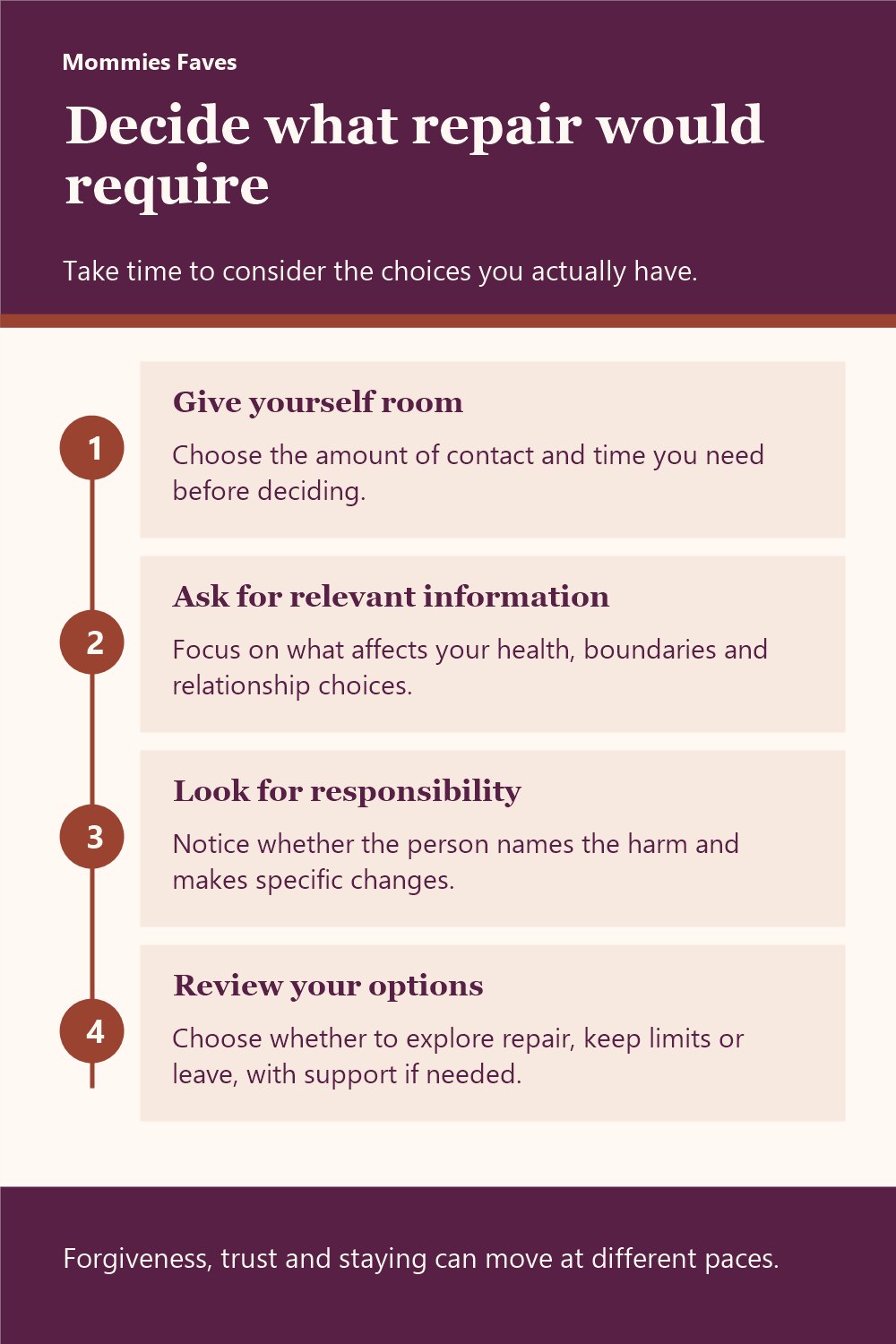
Decide what repair would require Take time to consider the choices you actually have.
- Give yourself room Choose the amount of contact and time you need before deciding.
- Ask for relevant information Focus on what affects your health, boundaries and relationship choices.
- Look for responsibility Notice whether the person names the harm and makes specific changes.
- Review your options Choose whether to explore repair, keep limits or leave, with support if needed.
Forgiveness, trust and staying can move at different paces.