

A divorce can bring several disputes at once: a payment due this week, a holiday schedule, and a piece of furniture you both want. Start with the issue that has the greatest consequence or the nearest deadline. You can care about the rest and come back to it when you have more information.
If you’re worried about threats, coercion or access to money or housing, get independent support before trying to negotiate. You do not have to arrange a private meeting or answer a demand on the spot.
1. Separate urgent issues from everything else
Write down each issue, any known deadline and what could happen if it isn’t addressed. Put safety, housing, immediate bills and children’s day-to-day arrangements near the top. Verify deadlines with a qualified local professional if you’re unsure; the loudest demand in your inbox may not be the issue that needs your attention first.
For a dispute about an object, ask what makes it important. You may be able to share copies of photos, agree on a replacement or talk through a different option once you’ve dealt with immediate needs.
2. Turn a disagreement into one question
Replace “You never make this easy” with the specific thing you need to know: “Can you confirm who’s picking up the children on Friday?” Keep the current issue separate from a longer history of hurt. If you’re too upset to write clearly, draft the message and review it before sending, when there’s time.
Keep agreements and dates in a place you can find later. If messages tend to escalate or you’re worried about how the other person will respond, get advice about a safer way to handle communication.
3. Know when to get independent advice
List the facts you know and write down what you need clarified before agreeing to anything that affects debt, support, housing or parenting. Ask a local family law professional what applies to your situation, what choices are available and whether there’s a deadline. If you’re in the United States, the Legal Services Corporation’s guide to civil legal aid can help you find local assistance.
If there is coercion or fear, tell the professional privately before considering a joint meeting or mediation. Ask how you can protect your safety and ability to make decisions.
4. Give children a plan they can use
A child needs to know who will collect them and what to bring. They don’t need to deliver a message about bills, decide who should get a holiday or listen to complaints about either household. Give them the part of the plan that’s settled and tell them when you’ll update them about the rest.
Choose one next action you can take today, such as confirming a deadline or drafting a message about a pickup. Give yourself some space to talk through the emotional side with someone who can support you.
Read the infographic in text
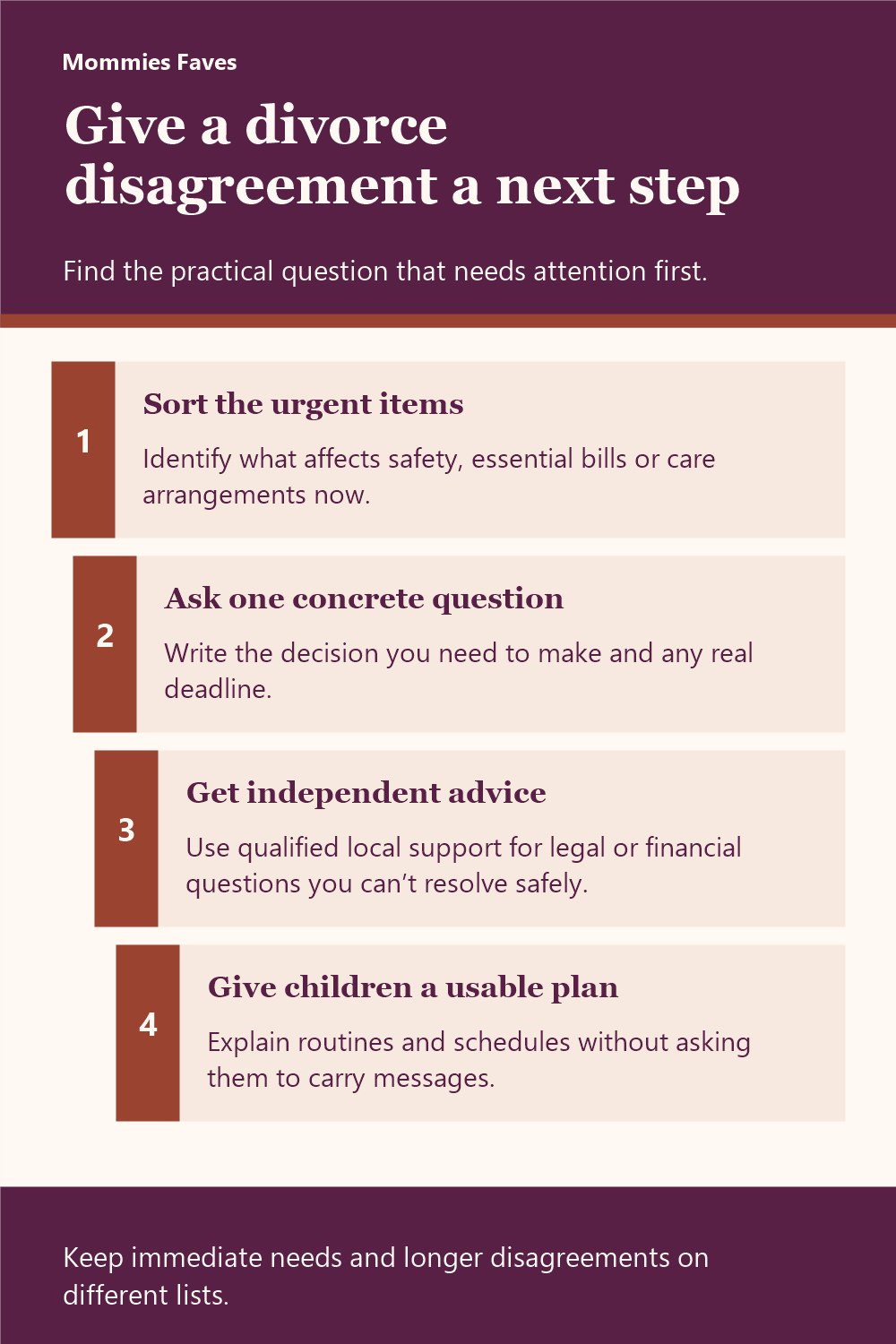
Give a divorce disagreement a next step Find the practical question that needs attention first.
- Sort the urgent items Identify what affects safety, essential bills or care arrangements now.
- Ask one concrete question Write the decision you need to make and any real deadline.
- Get independent advice Use qualified local support for legal or financial questions you can’t resolve safely.
- Give children a usable plan Explain routines and schedules without asking them to carry messages.
Keep immediate needs and longer disagreements on different lists.