

Dating a single parent involves getting to know a person whose family responsibilities are part of everyday life. A useful starting point is curiosity about their actual circumstances, rather than assumptions about how much time, trust or affection a parent can offer.
These nine considerations can help you discuss a relationship that respects both adults and the children involved. You do not need to become a parent yourself, move faster than feels right or ignore your own needs to show that you care.
On this page
- Make room for an honest conversation about dating
- Plan time together without making access a test
- Recognise both partners’ needs
- Leave introductions to a thoughtful shared plan
- Let a relationship with the children develop gradually
- Agree on your role before taking on responsibilities
- Respect necessary contact with another parent
- Discuss practical changes before making them
- Choose the relationship freely and review what works
1. Make room for an honest conversation about dating
Ask what each of you is looking for and what dating can realistically involve now. Parenting arrangements, work, rest and other commitments affect availability. Being a single parent does not tell you how someone feels about commitment, what happened in a previous relationship or whether they want another person to share parenting.
You could ask, “What kind of time together feels realistic for you?” and explain your own answer. Keep the conversation open to differences rather than assuming that affection will resolve them.
2. Plan time together without making access a test
Agree on dates that fit the childcare arrangements the parent has chosen. You might plan a short meal, a walk or a conversation at a time when neither person is rushing. Discuss how you will let each other know if plans change.
A child’s illness or an unexpected caregiving need may interrupt a plan. That does not automatically show a lack of interest. At the same time, repeated cancellations without communication or alternatives are worth discussing. Look for a workable pattern rather than testing love through immediate replies or last-minute availability.
3. Recognise both partners’ needs
A child’s care and safety need dependable attention. That does not mean the adult who is dating the parent must accept every arrangement without a say. Both partners can have needs for reliability, affection, privacy and time apart.
Make a specific request: “I understand this week is difficult. Could we choose a time to speak when we can both be present?” Listen to what is possible, and be honest if the available relationship does not fit your life. Our guide to discussing unmet needs with a partner offers ways to make those conversations clearer.
4. Leave introductions to a thoughtful shared plan
Do not treat meeting the children as a prize or proof that the relationship is serious. A parent may want to understand the relationship better before involving them. You can also say if you are not ready for that step.
Discuss the purpose of a meeting, what the child will be told and what other changes they are managing. There is no fixed number of dates that guarantees readiness. Avoid arriving unexpectedly, arranging contact through another person or asking the child to keep a meeting secret.
Our guide to helping children adjust when a parent dates considers routines, introductions and room for mixed feelings.
5. Let a relationship with the children develop gradually
If an introduction goes ahead, a brief, ordinary activity can keep the expectations manageable. Be polite, take an interest without interrogating and allow the child to participate at a comfortable pace. They do not owe you a hug, a special name or approval of the adult relationship.
Curiosity, reserve or mixed feelings do not make a child a rival. The American Academy of Pediatrics’ guide to becoming a stepfamily describes a gradual relationship between a child and a new stepparent. Early dating does not automatically create that role.
If a child raises a concern about your behaviour, listen and let their parent address it. Do not pressure them to withdraw it or persuade them that they misunderstood.
6. Agree on your role before taking on responsibilities
Dating a parent does not automatically make you a disciplinarian, emergency contact, babysitter or financial provider. Discuss any proposed responsibility explicitly before relying on it. You can be kind and dependable without agreeing to duties you cannot or do not want to take on.
Ask the parent about household expectations and how to respond if an issue comes up. Avoid making promises to a child that conflict with their parent’s arrangements. Questions about supervision, safety or major parenting decisions deserve a clear adult conversation, not assumptions made during a date.
7. Respect necessary contact with another parent
Some parents need regular communication about school, health, schedules or other practical matters. Contact with a former partner is not by itself evidence that the romantic relationship continues. Ask about the arrangements that affect your relationship without demanding access to private messages or details about the child’s other household.
Do not label every disagreement as drama or join in insults about the other parent. Keep children out of adult arguments, and never ask them to carry messages or report on another adult. If there are safety concerns or legal questions, the parent may need appropriate individual advice; you do not have to solve those issues yourself.
8. Discuss practical changes before making them
Longer visits, holidays, money and moving in can change daily family life. Talk about them before presenting a decision to the children or making promises that other people have to keep. Include privacy, household space and how adults will handle disagreements.
Support can begin with asking, “Would listening help, or is there something practical you would like to discuss?” Avoid offering a rescue you cannot sustain. Accept a declined offer, and keep gifts or help separate from expectations of access, affection or a faster commitment.
9. Choose the relationship freely and review what works
Notice how you treat each other over time. Are agreements realistic? Can you raise a concern without being shamed? Does each person have room to say no or change their mind? Parenthood does not establish someone’s character, and no set of dating tips can promise a lasting relationship.
You can care about the person and decide the relationship is not right for you. If you end it, discuss the adult reasons privately and avoid blaming the children. Where a child has formed a bond with you, leave any conversation about future contact to a careful, appropriate plan rather than making promises directly to them.
A useful next step is one honest discussion about what you each want, what you can offer and which boundaries need to be clear before the relationship develops further.
Read the infographic in text
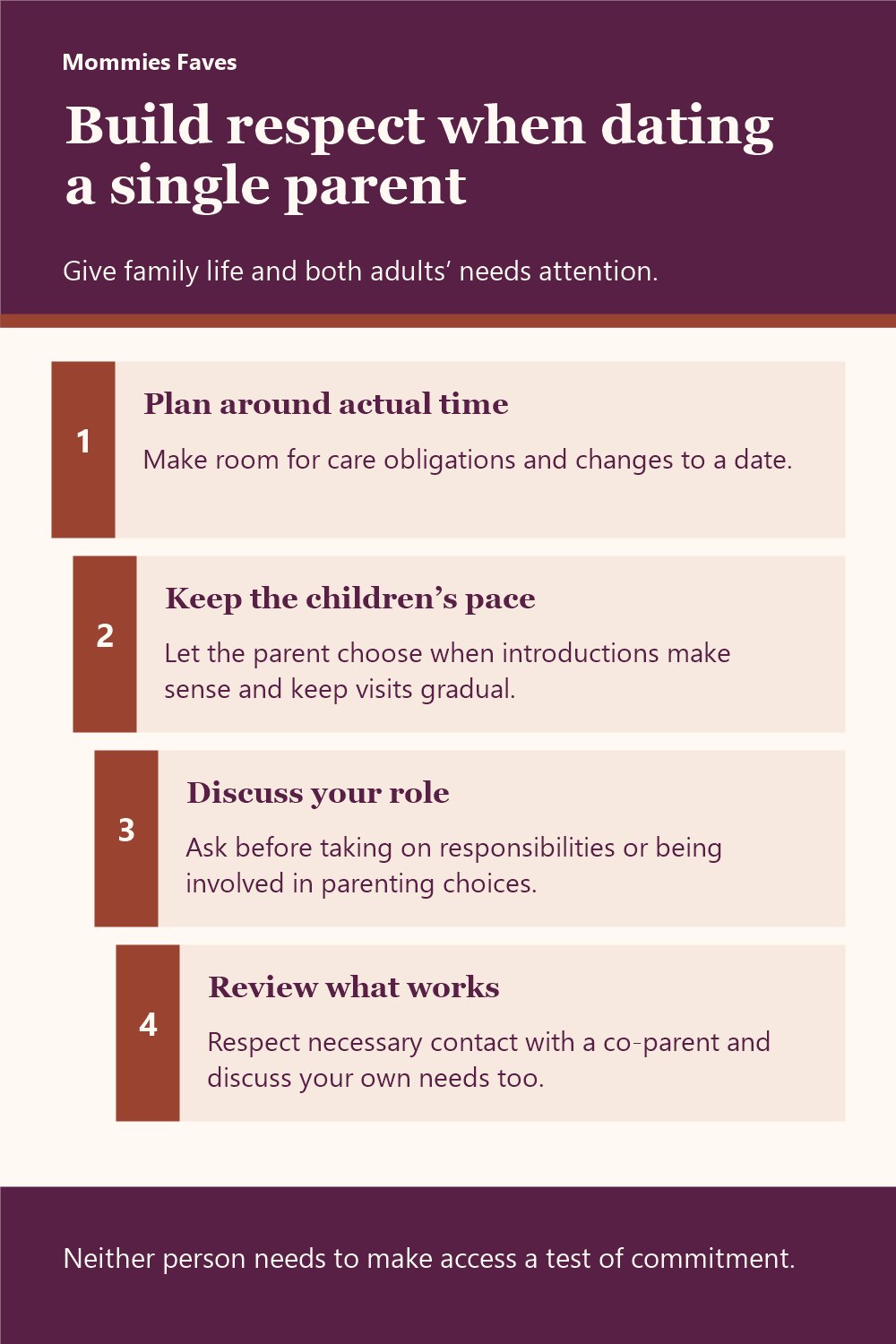
Build respect when dating a single parent Give family life and both adults’ needs attention.
- Plan around actual time Make room for care obligations and changes to a date.
- Keep the children’s pace Let the parent choose when introductions make sense and keep visits gradual.
- Discuss your role Ask before taking on responsibilities or being involved in parenting choices.
- Review what works Respect necessary contact with a co-parent and discuss your own needs too.
Neither person needs to make access a test of commitment.