

People sometimes pull away, go along with plans they don’t like, or assume a conversation will end badly. A habit may have helped you through a difficult experience, even if it doesn’t fit your life now. Start by noticing what you do and what you’d rather do next time.
A relationship also depends on how the other person treats you. If you’re being pressured or ignored, your discomfort may tell you something useful. You can keep a boundary while looking at your own choices.
1. Going quiet when something matters
A short pause can help if you’re overwhelmed. Instead of disappearing from the conversation, try, “I need half an hour. Can we talk again after dinner?” If you don’t feel safe returning to it, talk with someone you trust first.
2. Dismissing your own needs
Notice when you say “it’s fine” while hoping the other person will guess what you need. Try naming one preference: “I’d like a day’s notice when plans change.” The other person can tell you what they can do.
3. Letting guilt do all the talking
If you broke an agreement, acknowledge what happened and offer a way to make it right. Then give the other person room to respond. You can take responsibility for an action without promising to say yes to everything afterward.
4. Expecting every conversation to go perfectly
If you put off saying something until you’ve found the perfect words, try a small opening: “I’ve been thinking about our plans and I’m nervous to bring it up.” A first sentence can be enough to start.
5. Going along with a role you don’t want
You might always host, choose the date or carry the conversation because you think it’s expected. Ask to share one piece: “Would you choose the place this week?” See how it feels to let someone else take a turn.
6. Measuring your relationship against other people’s
A friend’s photos or account of their weekend won’t tell you how their relationship feels day to day. Write down one thing you want for your own relationship, like more time to talk, and discuss that directly.
7. Deciding what someone means before you ask
When something reminds you of a past hurt, notice the difference between what happened now and what you fear it means. Try, “When I didn’t hear back, I worried our plan had changed. Are we still on?” Repeatedly broken agreements deserve attention even after you’ve asked.
8. Avoiding an honest answer to keep the peace
If you’re unsure about a big decision, try, “I’m still thinking about it. Can we talk this weekend?” Pick one habit from this list and one response you can practice. Revisit it after you’ve tried it a few times.
Read the infographic in text
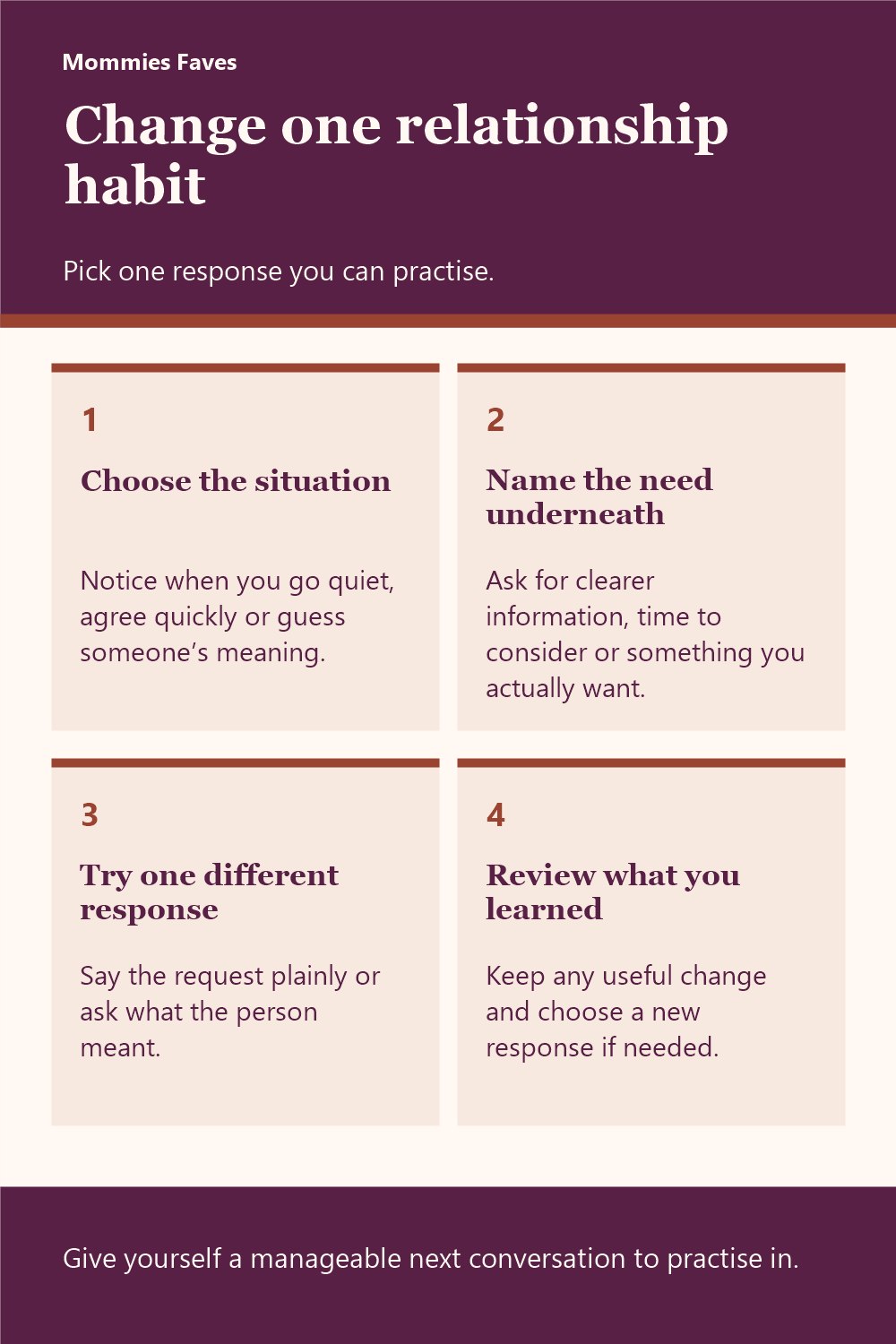
Change one relationship habit Pick one response you can practise.
- Choose the situation Notice when you go quiet, agree quickly or guess someone’s meaning.
- Name the need underneath Ask for clearer information, time to consider or something you actually want.
- Try one different response Say the request plainly or ask what the person meant.
- Review what you learned Keep any useful change and choose a new response if needed.
Give yourself a manageable next conversation to practise in.