

Dating can become tiring when you are repeatedly arranging plans, explaining what you want or dealing with unanswered messages. You may still want a relationship while having little appetite for another date. Taking that seriously can help you choose a pace that fits your life.
You can continue, pause or change how you meet people. None of those choices proves how committed you are to finding love. A relationship is a mutual possibility, and persistence cannot promise that a particular person or outcome will appear.
On this page
1. Notice what is wearing you out
Consider which part of dating is difficult. It might be the time spent on an app, repeated cancellations, travel costs, unwanted attention or trying to find childcare. Different difficulties may call for different changes.
Try describing one recent week. How much time did dating take? Did you give up rest or another activity you valued? Were the plans manageable, or were you stretching your budget and energy to keep them?
You do not have to decide that dating is entirely good or entirely hopeless. You might enjoy meeting someone while disliking long message exchanges. That distinction can help you choose what to do differently.
2. Separate your wishes from pressure
Ask what you want now: companionship, affection, sex, a committed partnership or more time to yourself. Your answer may differ from what you wanted before a divorce or breakup. It may also differ from what relatives think should happen next.
If you are parenting, wanting adult connection does not mean a new person must quickly become involved with your children. You can keep early dating separate from family life while considering whether the relationship is something you want to continue.
Advice from a psychic, spiritual practice or trusted friend may be meaningful to you. You can reflect on it while making your own decision. A hopeful interpretation does not require you to wait for an unavailable person, ignore their stated wishes or keep dating when you want a break.
Mixed feelings are allowed. You can feel disappointed and still be open to meeting someone; you can feel hopeful and still decide that this week is too full.
3. Choose between continuing, changing and pausing
Continue if the current approach fits your interest and capacity. That might mean one planned date rather than filling every free evening. There is no required volume of meetings that demonstrates effort.
Change the approach if you want connection but dislike the process you are using. You might reduce app time, accept an introduction or join an activity because you enjoy it. An activity can be worthwhile even when it produces no date.
Pause if you need space from searching. You can silence app notifications or decline invitations without choosing a permanent end to dating. Decide whether setting a review point would help, or whether you prefer leaving it open.
Choose the option you actually want to try rather than the one that sounds most optimistic. You can revise it when circumstances change.
4. Set practical limits and clear expectations
Decide what you can comfortably spend in time, money and personal disclosure. You might choose nearby meetings, a shorter first date or fewer simultaneous conversations. Include transport, childcare and recovery time in the plan where relevant.
Tell another person about the limits that affect your plans: “I am interested in meeting, and Saturday afternoon is the time I can offer.” You do not need to disclose private details about your children or former partner to justify your availability.
Ask about intentions early enough to make your own choice. If someone wants a casual connection and you want commitment, you can decline without waiting for them to change. Attraction does not settle that difference.
A straightforward refusal can be kind: “Thank you for the invitation. I do not want another date.” You are allowed to end a connection that does not fit without identifying a serious fault in the other person.
5. Review the experience fairly
After trying a change, consider whether it made dating more manageable. Did you keep your limits? Did you enjoy anything about the meeting? Did the other person respect your answer when you wanted something different?
Every date does not have to become a lesson, a good memory or a step towards an ideal partner. Some are simply disappointing. You can acknowledge that without turning it into a prediction about all future relationships.
Keep other sources of connection in view, including friends, family and interests that matter to you. Your next decision can reflect your actual circumstances rather than a promise that enough persistence must eventually be rewarded.
Read the infographic in text
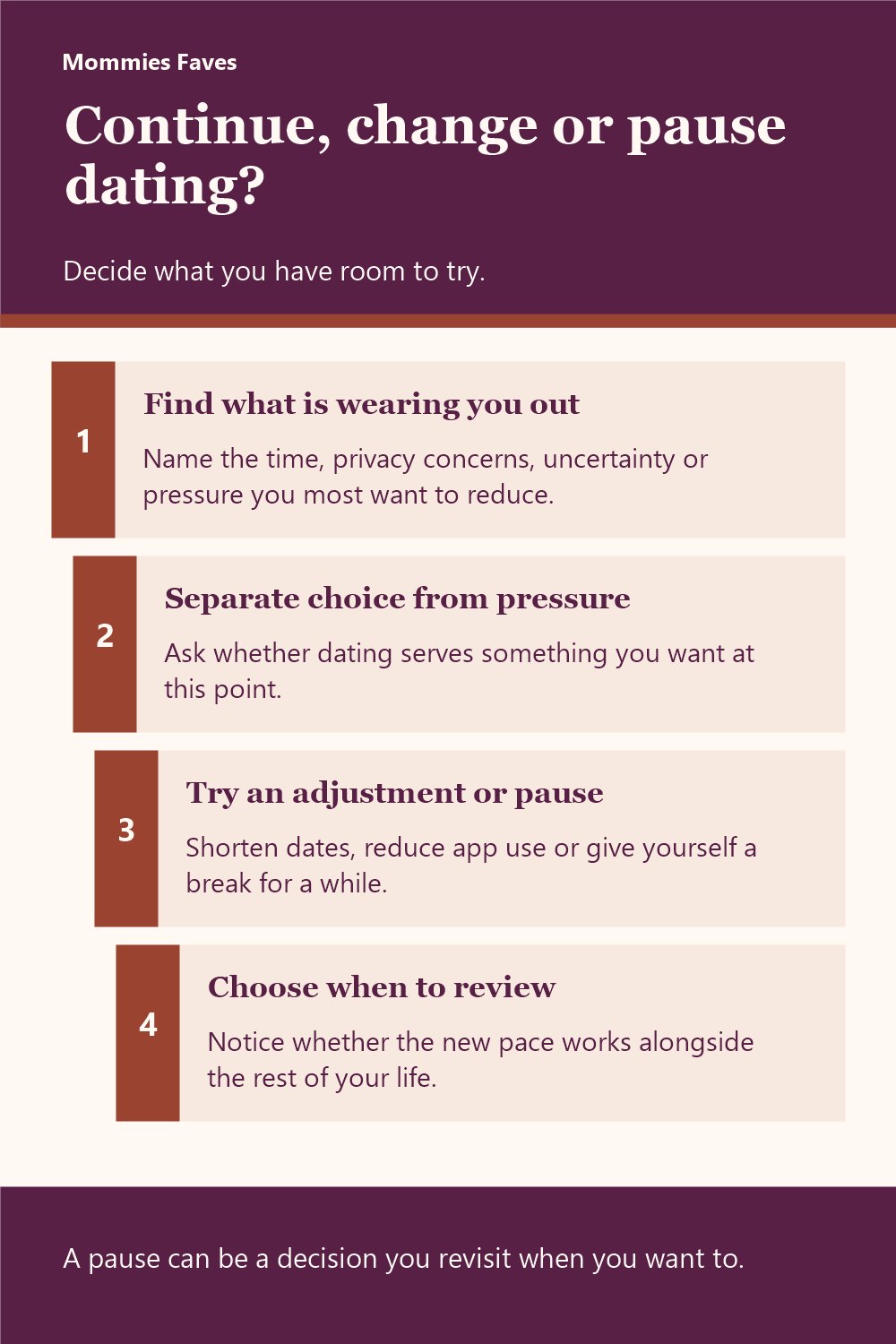
Continue, change or pause dating? Decide what you have room to try.
- Find what is wearing you out Name the time, privacy concerns, uncertainty or pressure you most want to reduce.
- Separate choice from pressure Ask whether dating serves something you want at this point.
- Try an adjustment or pause Shorten dates, reduce app use or give yourself a break for a while.
- Choose when to review Notice whether the new pace works alongside the rest of your life.
A pause can be a decision you revisit when you want to.