

Wondering whether someone is “the one” can bring a wish for certainty: a conversation, feeling or sign that settles the question. A more useful approach is to ask whether the relationship gives both people room for honesty, choice and the life they want. You can explore that gradually without requiring complete disclosure or a promise that nothing will change.
Talking matters, but people differ in how quickly they share feelings and which experiences they want to keep private. Look at whether you can discuss decisions that affect you together, hear a limit without punishment and follow through on agreements. One difficult conversation does not decide the whole relationship.
On this page
Distinguish honesty from total disclosure
You can ask for clarity about the relationship without asking for access to every message, memory or private thought. “What are you looking for with me?” concerns a shared decision. “Tell me everything that happened with your ex” may ask for details they do not want to share.
Feelings can be expressed through words, actions or both. If you need more verbal reassurance, describe what would help: “I would like us to talk about how this is going.” Notice whether your partner engages, suggests another time or repeatedly dismisses the need. Difficulty finding words is different from contempt or deliberate deception.
The NHS guidance on healthy relationships highlights listening and honest conversation. You might try one topic at a time, allow pauses or use a written message if that makes it easier to express yourselves.
Discuss the future and children
Ask what each of you wants rather than assuming time together means the same plan. That might include exclusivity, living arrangements, marriage or keeping separate homes. An honest difference can matter even when both people care deeply. Neither person needs to promise a future they do not want.
If children are part of either person’s life or hopes, discuss that before making commitments that depend on shared expectations. Someone can be uncertain about having children; that uncertainty is worth understanding rather than treating as a promise. If you already parent, keep introductions and responsibilities separate from the excitement of a new relationship. Children do not need to decide whether this person is right for you.
Talk about intimacy and shared responsibilities
Conversations about affection and sex should leave room for preferences, uncertainty and a freely given no. You can ask what feels comfortable and explain your own needs without making disclosure, sexual activity or a particular level of desire a test of love. Consent remains necessary within an established relationship.
Before sharing expenses or a home, discuss the money decisions that will affect both of you: contributions, bills, borrowing and what remains separate. Relevant clarity does not require handing over passwords or control of your income. A conversation can identify questions that need more time or independent advice before you commit.
Work, study and caring responsibilities also shape a shared life. Ask about schedules, travel, ambitions and how household tasks would be handled. You may not have identical priorities, but you should be able to examine the practical effects without one person’s time automatically counting less.
Understand family, fears and accountability
Discuss the family contact you each want, including holidays, visits and boundaries around relatives. A difficult childhood does not determine whether someone can build a caring relationship. Some people have close relatives; others rely on chosen family or need distance from unsafe relationships.
Sharing a fear can help a partner understand you, but no one owes a detailed account of trauma to prove trust. Ask what support would help now. You can acknowledge a feeling while declining demands that restrict your friends, privacy or independent choices.
When something goes wrong, look for specific accountability: naming the behaviour, listening to its effect and making a realistic change. Having made a mistake does not make a person incapable of love. Repeated harm followed by apologies without change deserves attention.
Past relationships can offer useful context when someone wants to share it. Focus on present agreements and relevant responsibilities rather than comparisons, interrogation or a complete sexual history. Privacy and honesty can coexist.
Discuss health and choose a next step
Health conversations can focus on consent, practical needs and decisions that affect you together. Ask what someone wants you to know and what support they would welcome. Illness, disability or needing time to discuss something private does not make a person an unsuitable partner. Specialist questions can be taken to an appropriate healthcare professional.
Choose one topic to discuss and one agreement to revisit. You might continue getting to know each other, slow down or decide your needs differ. If raising concerns brings threats, humiliation or control, seek private support from someone trustworthy or a local domestic abuse service. You do not need certainty about “the one” to take your own needs seriously.
Read the infographic in text
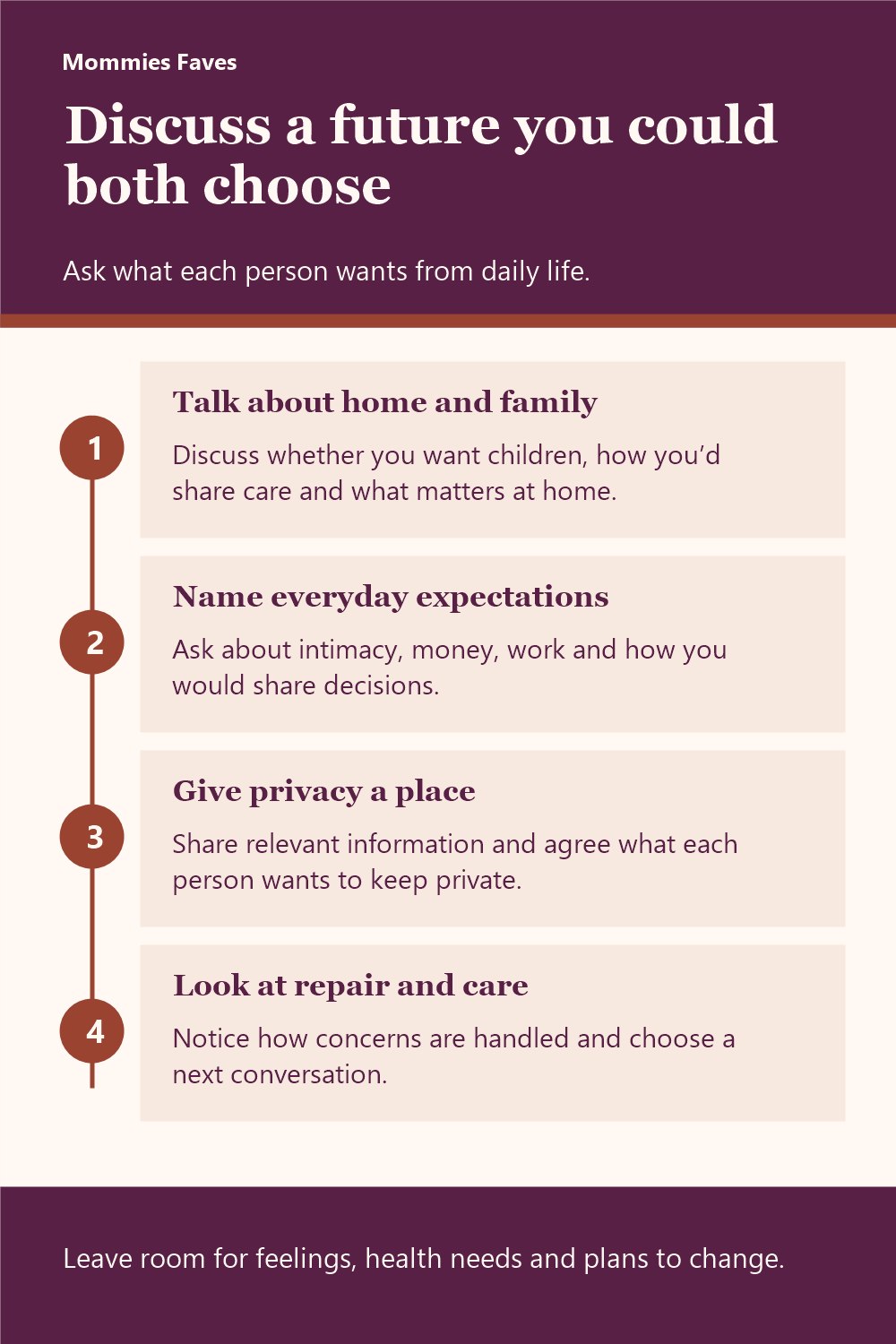
Discuss a future you could both choose Ask what each person wants from daily life.
- Talk about home and family Discuss whether you want children, how you’d share care and what matters at home.
- Name everyday expectations Ask about intimacy, money, work and how you would share decisions.
- Give privacy a place Share relevant information and agree what each person wants to keep private.
- Look at repair and care Notice how concerns are handled and choose a next conversation.
Leave room for feelings, health needs and plans to change.